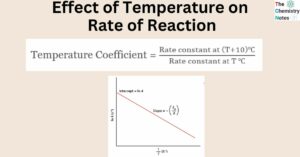
Effect of Temperature on Rate of Reaction

Effect of Temperature on Rate of Reaction

The rate of most of the chemical reactions increases with an increase in temperature. The rate constant of a chemical process doubles for every 10 degrees Celsius rise in temperature. Until 1889, there was no precise way to physically determine … Read more

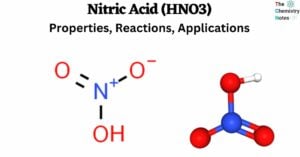
Nitric Acid (HNO3): Properties, Reactions, Applications

Nitric Acid (HNO3)

The alchemist first created nitric acid (HNO3) by combining saltpeter (KNO3) and concentrated sulfuric acid (H2SO4). The process involved the method to separate gold and silver, wherein silver demonstrated solubility while gold exhibited insolubility. The acid was referred to as … Read more

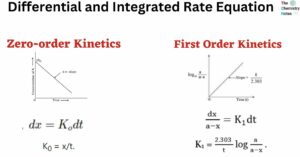
Differential and Integrated Rate Equation

Differential and Integrated Rate Equation Zero and First Order Kinetics

Differential and Integrated Rate Equation of Zero Order Kinetics A reaction is considered to be of zero order if its rate is independent of the concentration of the reactants. Let us consider a general zero-order reaction. Initially concentration At time … Read more

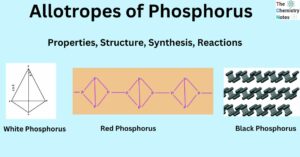
Allotropes of Phosphorus: Properties, Structure, Synthesis

Allotropes of Phosphorus

Phosphorus is highly reactive and therefore does not exist in its elemental form in nature. Phosphates tend to occur in an amalgamated state. The significant phosphate minerals include: Phosphate rock or phosphorite: Ca3(PO4)2Fluorapatite: 3Ca3(PO4)2.CaF2Chlorapatite: 3Ca3(PO4)2.CaCl2Vivianite: Fe3(PO4)2.8H2O In addition to the … Read more