Redox Reactions (A Level Chemistry Revision Notes)
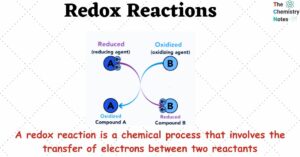
Redox Reactions

Redox reactions can be categorized into two distinct processes, namely oxidation and reduction. The redox reaction, commonly referred to as the Oxidation-Reduction reaction, always includes the simultaneous occurrence of oxidation and reduction phenomena. In the context of a chemical reaction, … Read more
Electrochemistry (A Level Chemistry Revision Notes)

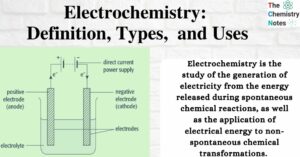
Electrochemistry: Definition, Types, Components, Examples, and Uses

In the modern world, it is challenging to get through a single day without interacting with electrochemistry. An electrochemical reaction provides the necessary energy for any device that requires a battery. Around us, there is a sizable “electric world.” Electricity … Read more

Hess’s Law (A Level Chemistry Revision Notes)

Hess's Law

Directly determining the enthalpy change for a chemical reaction can be challenging in some cases. It might be challenging to manage the reaction that is occurring in a lab.  Alternatively, taking measurements from the reaction mixture using conventional calorimetry techniques … Read more

Intermolecular Forces (A Level Chemistry Revision Notes)

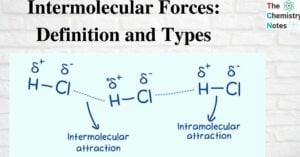
Intermolecular Forces- Definition and Types

Intermolecular forces (IMF) are the attractive and repulsive forces that exist between the molecules of a substance. IMFs, or intermolecular forces, are mechanical forces that exist between molecules. Contrarily, intramolecular forces are the forces that exist between the atoms of … Read more

Metallic Bonding (A Level Chemistry Revision Notes)

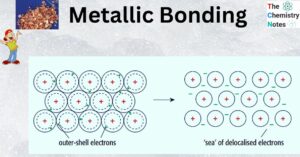
Metallic Bonding: Definition, Strength, Properties, Examples

Metallic bonding, a type of chemical bonding, gives metals their distinctive properties, such as malleability, luster, and conductivities for both heat and electricity. Hence, metallic bonds are critical to metal properties. Metallic bonds differ from covalent and ionic bonds because … Read more