Skip to content
Science Info
  • Home
  • Science Facts
  • Top 10 in Science
  • Science Instruments
  • Resources
    • Astronomy
    • Biology
    • Chemistry
    • Periodic Table
    • Physics
    • Syllabus
    • Universities

Jyoti Bashyal

Jyoti Bashyal is a Ph.D. student in the Department of Chemistry and Chemical Biology at the University of New Mexico, USA. Her research explores how proteins change their shape and behavior in neurodegenerative diseases such as Alzheimer's disease. She is interested in how small molecular changes can push a protein away from its healthy role and toward disease, and what those changes reveal about how neurons stay healthy. Her work combines protein biochemistry, chemical biology, and computational tools, building on her earlier research in organic and computational chemistry in Nepal. Outside the lab, she is a dedicated science communicator who loves making complex concepts approachable and engaging. Through writing and teaching, she hopes to spark curiosity about science in students everywhere, especially those who have not yet had the chance to see research up close. Her goal is to connect fundamental discoveries about proteins to real-world understanding of disease and help others see the power and beauty of science in action.

Chemical Equilibrium (A Level Chemistry Revision Notes)
July 13, 2026May 1, 2026 by Jyoti Bashyal
Chemical Equilibrium- Definition, Types, and Importance

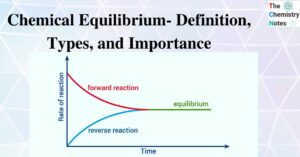
Chemical equilibrium is defined as the state of a system in which the concentration of the reactant and the concentration of the products do not fluctuate over time and the system exhibits no additional change in properties. When the rate … Read more
Thin-layer Chromatography (A Level Chemistry Revision Notes)

July 13, 2026April 29, 2026 by Jyoti Bashyal
Thin layer chromatography

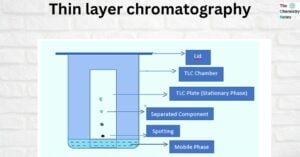
Thin layer chromatography (TLC) is one of the most useful tools in phytochemistry and biotechnology for monitoring the progress of organic chemical reactions and determining the purity of organic compounds. Like all chromatographic methods, TLC uses the analyte’s different affinity … Read more

Predicting the Type of Polymerization (A Level Chemistry Revision Notes)

July 13, 2026April 28, 2026 by Jyoti Bashyal
Predicting the Type of Polymerization

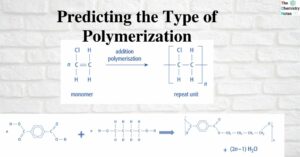
Regarding the prediction of the type of polymerization, before anything else, it’s critical to recognize the monomers’ primary functional groups. You may encounter a variety of polymer-related problems to solve: Predicting the type of polymerization reaction for given monomer(s) Addition polymers … Read more

Arene (Aromatic Hydrocarbon) (A Level Chemistry Revision Notes)

July 13, 2026April 21, 2026 by Jyoti Bashyal
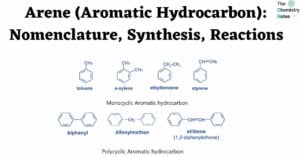
Arene (Aromatic Hydrocarbon) Nomenclature, Synthesis, Reactions, Uses

An aromatic hydrocarbon, also known as arene (or aryl hydrocarbon), is a hydrocarbon that has sigma bonds and delocalized pi electrons between carbon atoms to form rings. Benzene, C6H6, and other aromatic hydrocarbons have such distinct features from ordinary open-chain … Read more

Stability Constants (A Level Chemistry Revision Notes)

July 13, 2026April 20, 2026 by Jyoti Bashyal
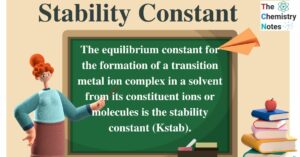
Stability Constant

The stability constant (also known as a formation constant or binding constant) is an equilibrium constant for complex formation in solution. Transition element ions are hydrated in aqueous solutions. They are complex ions that contain water as a ligand. Different … Read more

Stereoisomerism in transition element complexes (A Level Chemistry Revision Notes)

July 13, 2026April 19, 2026 by Jyoti Bashyal
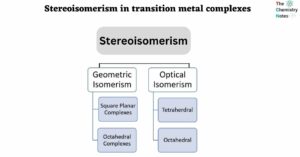
Stereoisomerism in transition metal complexes

Transition metal complexes, like organic compounds, exhibit stereoisomerism, specifically geometric and optical isomerism. Geometric isomers, on the other hand, are only possible for square planar and octahedral complexes, not tetrahedral. In contrast, optical isomers are only possible for tetrahedral and … Read more

Partition coefficient (A Level Chemistry Revision Notes)

July 13, 2026April 18, 2026 by Jyoti Bashyal
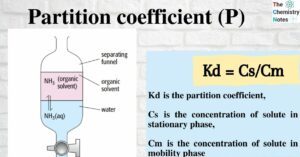
Partition coefficient (P)

A compound’s concentrations in a mixture of two immiscible solvents at equilibrium are expressed as a partition coefficient (P) or distribution coefficient (D). What is Partition Coefficient? The ratio of a compound’s unionized species concentrations in a mixture of two … Read more

Lewis Acids and Bases (A Level Chemistry Revision Notes)

July 13, 2026April 17, 2026 by Jyoti Bashyal
Lewis acids and bases

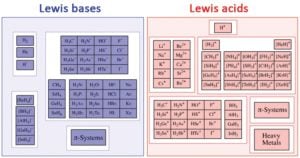
Definition of Lewis Acids and Bases Gilbert Newton Lewis (American, 1923) put forward a broader concept of acids and bases on the basis of electron transfer. This concept is called the Lewis concept. Lewis’s concept eliminates the necessity of the … Read more

Standard Electrode Potential (Eꝋ) (A Level Chemistry Revision Notes)

July 13, 2026April 16, 2026 by Jyoti Bashyal
Measuring the Standard Electrode Potential (Eꝋ)

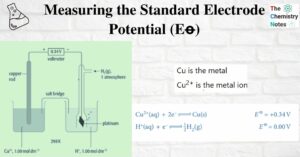
Standard Electrode Potential (Eꝋ) value of three different half-cell types is determined by connecting to a standard hydrogen electrode. Measuring the standard electrode potential of Metal/metal ion An example of a metal/metal ion half-cell is the Cu2+ / Cu half-cell … Read more

Older posts
Newer posts
← Previous Page1 … Page4 Page5 Page6 … Page66 Next →

Topics

  • Astronomy (4)
  • Biology (18)
  • Book Reviews (1)
  • Chemistry (741)
  • Differences Between (70)
  • Events (2)
  • Journals (1)
  • Periodic Table (130)
  • Physics (124)
  • Science Facts (12)
  • Science Instruments (17)
  • Syllabus (17)
  • Top 10 in Science (14)
  • Universities (4)
  • About
  • Our Team
  • Contact Us
  • Editorial Policy
  • Privacy Policy
  • Cookie Policy
  • Disclaimer (Terms and Conditions)
© 2026 Science Info. Made with ♡ by Dr. Sagar Aryal.