Skip to content
Science Info
  • Home
  • Astronomy
  • Physics
  • Chemistry
    • Periodic Table
    • Analytical Chemistry
    • Basic Chemistry
    • Biochemistry
    • Computational Chemistry
    • Environmental Chemistry
    • Inorganic Chemistry
    • Nanochemistry
    • Organic Chemistry
    • Pharmaceutical Chemistry
    • Physical Chemistry
  • Biology
    • Plants
    • Animals
  • Science Facts
  • Top 10 in Science

Jyoti Bashyal

Jyoti Bashyal is a Ph.D. student in the Department of Chemistry and Chemical Biology at the University of New Mexico, USA. Her research focuses on understanding the structure-function relationships in glucose transporters (GLUTs) and their implications for diseases such as cancer, diabetes, and metabolic syndromes. By investigating how these proteins work at the molecular level, Jyoti aims to contribute to drug discovery efforts targeting these critical transporters. She is particularly interested in exploring how high-throughput protein expression and crystallization techniques can be applied to better understand carbohydrate-related proteins and their therapeutic potential. Blending her expertise in chemistry, biology, and computational tools, Jyoti is driven by a passion for solving complex scientific challenges. Outside the lab, she is a dedicated science communicator who loves making complex concepts approachable and engaging. Through writing and sharing her knowledge, she hopes to inspire curiosity and excitement about science. Jyoti’s goal is to connect groundbreaking discoveries with real-world impact, encouraging others to see the power and beauty of science in action.

Physical Properties of Group 17 Elements (A Level Chemistry Revision Notes)
July 13, 2026May 10, 2026 by Jyoti Bashyal
Physical Properties of Group 17 Elements in Periodic Table

Group 17 of the periodic table is named Halogens as they all produce sodium salts with similar properties. In Greek, halo means salt, and genes mean generating, so salt-producing is a collective meaning of the term. Halogens are also known … Read more
Trends in the Properties of Group 2 (Alkaline Earth) Metals (A Level Chemistry Revision Notes)

July 13, 2026May 9, 2026 by Jyoti Bashyal
Trends of the Properties of Group 2 Metals (Alkaline Earth Metals)

Group 2 elements (alkaline earth metals) all have two electrons in their outermost principal quantum shell. All Group 2 metals can form ionic compounds in which they donate their two outermost electrons (acting as reducing agents) to form a +2 … Read more

Periodicity of chemical properties of the elements in Period 3 (A Level Chemistry Revision Notes)

July 13, 2026May 8, 2026 by Jyoti Bashyal
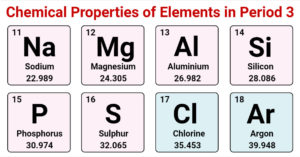
Chemical Properties Of Elements in Period 3

According to modern periodic law- The physical and chemical properties of the elements are the periodic function of their atomic numbers and electronic configuration. Chemical properties are observed during chemical reactions and are concerned with the electrons of the outer … Read more

Periodicity of physical properties of the elements in Period 3 (A Level Chemistry Revision Notes)

July 13, 2026May 7, 2026 by Jyoti Bashyal
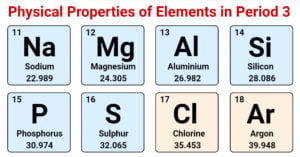
Physical Properties of Elements in Period 3

The elements of period 3 are placed in the third row of the periodic table. The elements positioned in period 3 are Sodium (Na), Magnesium (Mg), Aluminium (Al), Silicon (Si), Phosphorus (P), Sulphur (S), Chlorine (Cl), and Argon (Ar). Firstly, … Read more

Activation Energy (A Level Chemistry Revision Notes)

July 13, 2026May 6, 2026 by Jyoti Bashyal
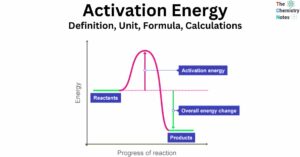
Activation Energy

The activation energy (Ea) refers to the quantity of energy necessary for a successful collision between particles, leading to the breaking of bonds and the production of products. The presence of activation energy is a prerequisite for the initiation of … Read more

Chemical Reaction Kinetics (AS and A Level Chemistry)

July 3, 2026May 5, 2026 by Jyoti Bashyal
Reaction Kinetics/ Chemical Kinetics

Chemical kinetics, also known as reaction kinetics, is the subfield of physical chemistry concerned with the study of the rates of chemical reactions. Reaction kinetics is the study of chemical reaction rates. The data obtained from rate experiments can shed light … Read more

Brønsted-Lowry Acid Theory of Acids and Bases (A Level Chemistry Revision Notes)

July 13, 2026May 4, 2026 by Jyoti Bashyal
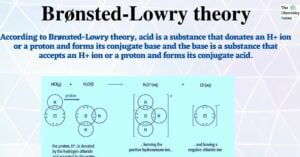
Brønsted-Lowry Acid Theory

 The Brønsted-Lowry Acid theory is an extension of the Arrhenius theory of acids and bases. The Arrhenius theory states that in an aqueous solution, an acid will raise the concentration of H+ ions whereas a base will raise the concentration … Read more

Dynamic equilibrium (A Level Chemistry Revision Notes)

July 13, 2026May 2, 2026 by Jyoti Bashyal
Dynamic Equilibrium

If the chemical equilibrium is the result of two active and opposing reactions, the system’s equilibrium is referred to as a dynamic equilibrium. Dynamic equilibria occur when there is no observable change in a reaction, but the system is still … Read more

Chemical Equilibrium (A Level Chemistry Revision Notes)

July 13, 2026May 1, 2026 by Jyoti Bashyal
Chemical Equilibrium- Definition, Types, and Importance

Chemical equilibrium is defined as the state of a system in which the concentration of the reactant and the concentration of the products do not fluctuate over time and the system exhibits no additional change in properties. When the rate … Read more

Older posts
Newer posts
← Previous Page1 … Page3 Page4 Page5 … Page66 Next →

Topics

  • Analytical Chemistry (164)
  • Animals (2)
  • Astronomy (4)
  • Basic Chemistry (144)
  • Biochemistry (38)
  • Book Reviews (1)
  • Botany (2)
  • Computational Chemistry (4)
  • Differences Between (70)
  • Environmental Chemistry (31)
  • Events (2)
  • Inorganic Chemistry (183)
  • Journals (1)
  • Nanochemistry (17)
  • Organic Chemistry (177)
  • Periodic Table (130)
  • Pharmaceutical Chemistry (15)
  • Physical Chemistry (199)
  • Physics (115)
  • Plants (13)
  • Science Facts (12)
  • Syllabus (5)
  • Top 10 in Science (14)
  • Universities (4)
  • Zoology (1)
  • Redox Reactions (A Level Chemistry Revision Notes)
  • Oxidation Numbers (A Level Chemistry Revision Notes)
  • Electrochemistry (A Level Chemistry Revision Notes)
  • Hess’s Law (A Level Chemistry Revision Notes)
  • The Gaseous State: Ideal and Real gases (A Level Chemistry Revision Notes)
  • About
  • Our Team
  • Contact Us
  • Editorial Policy
  • Privacy Policy
  • Cookie Policy
  • Disclaimer (Terms and Conditions)
© 2026 Science Info. Made with ♡ by Sagar Aryal.