Skip to content
Science Info
  • Home
  • Science Facts
  • Top 10 in Science
  • Resources
    • Astronomy
    • Biology
    • Chemistry
    • Periodic Table
    • Physics
    • Syllabus
    • Universities

Chemistry

Chemistry is the study of elements (such as atoms, molecules, compounds, ions, and so on) and their chemical composition, properties, structure, and chemical reactions.

  • Chemistry is also concerned with the chemical interaction (bonding) of elements, atoms, and molecules. It investigates the causes and consequences of bonding.
  • Furthermore, chemistry is concerned with the energies emitted or absorbed by various molecules.
  • Chemistry is the science that studies the properties, content, and structure of substances (specified as elements and compounds), as well as the transformations they go through and the energy released or absorbed during these processes.
  • Chemistry is one of the most fundamentalĀ fields of science, involved with the in-depth investigation of matter, its properties, composition (chemical), and application.
  • Chemistry is further classified into the following groups based on the materials, processes, and system types under research.
  • Organic chemistry: Organic chemistry is the study of life’s chemistry and the reactions that occur in living organisms. It includes the study of organic processes in addition to the structure and characteristics of chemical molecules that are mainly made of carbon and hydrogen.
  • This discipline of chemistry is concerned with the in-depth study of the structure, characteristics, and synthesis of chemical substances having carbon and hydrogen along with minor/trace elements such as sulfur, oxygen, and nitrogen.
  • Inorganic chemistry: The study of the characteristics and behavior of inorganic compounds such as metals, minerals, ceramics, crystal formations, catalysts, and the majority of elements in the Periodic Table is known as inorganic chemistry. It encompasses all ‘non-organic’ chemical substances found in nature. This branch is concerned with the in-depth investigation of the characteristics, production, and behavior of inorganic substances. The creation and behavior of inorganic or organometallic chemical compounds present in the earth’s crust and non-living materials are covered in this subject.
  • Physical chemistry: This discipline of chemistry studies the effect of chemical structure on the physical qualities of a substance, the rate of chemical reactions, the calculation of properties and structures, and the interaction of molecules with radiation. Quantum chemistry, photochemistry, spectroscopy, chemical kinetics, and surface chemistry are all subfields of physical chemistry.
  • Physical Chemistry is concerned with the ‘physical attributes’ of chemical compounds through the application of law and other physics concepts such as motion, energy, force, time, statistical mechanics, quantum chemistry, and thermodynamics.
  • Analytical chemistry: Analytical chemistry is the qualitative and quantitative examination of the chemistry of substances. It is a branch of chemistry that analyses, utilizes tools, and employs various procedures to separate, identify, and quantify materials. So, analytical chemistry is concerned with identifying and quantifying specific molecules.
  • Biochemistry: Biochemistry is the scientific investigation of biological processes at the cellular and molecular levels using chemistry. In this field of chemistry of living cells, tissues, organs, and organisms is addressed. Its primary goal is to comprehend how biomolecules link to a specific process (metabolism) within a living cell. It seeks to understand the structures, functions, and interactions of proteins, nucleic acids, carbohydrates, and lipids to facilitate life.

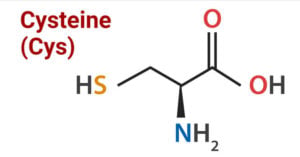
Cysteine- Definition, Structure, Properties, Biosynthesis, Uses
June 5, 2022January 5, 2022 by Sagar Aryal, PhD
Structure of Cysteine

What is Cysteine? Cysteine Definition Cysteine is a non-essential crystalline sulfur-containing amino acid and is abbreviated as Cys. Cystine is one of the main five amino acids (arginine, cysteine, glutamine, tyrosine, and histidine) that are needed for human growth and … Read more
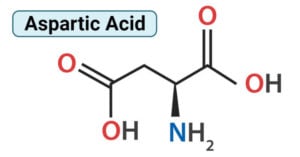
Aspartic Acid (Aspartate)- Definition, Structure, Properties, Biosynthesis, Uses

December 17, 2021 by Sagar Aryal, PhD
Structure of Aspartic Acid (Aspartate)

What is Aspartic Acid (Aspartate)? Definition- Aspartic acid or aspartate, also known as amino succinic acid is a non-essential amino acid that is synthesized itself in the human body through different sources of foods. It is mainly responsible for synthesizing … Read more

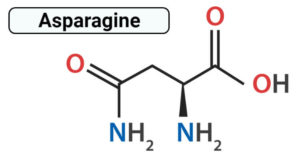
Asparagine- Definition, Structure, Sources, Properties, Biosynthesis, Uses

December 15, 2021 by Sagar Aryal, PhD
Structure of Asparagine

What is Asparagine? Asparagine is a non-essential, alpha-amino acid that was first isolated in 1806 from asparagus juice by Vauquelin and Robiquet. They discovered asparagine after they observed cubic crystals in the sap of asparagus in 1802 by Delaville. The … Read more

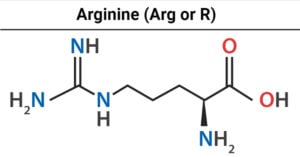
Arginine- Definition, Structure, Sources, Properties, Biosynthesis, Uses

November 20, 2021October 5, 2021 by Sagar Aryal, PhD
Arginine

Arginine Definition Arginine is also known as L-arginine is a semi-essential amino acid among 20 amino acids. It was first isolated by Schulze in 1886 from the lupin seedlings that are particularly abundant in protamines and histones. Arginine is abbreviated … Read more

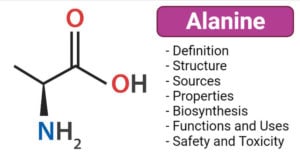
Alanine- Definition, Structure, Sources, Properties, Biosynthesis, Uses

October 14, 2021September 26, 2021 by Sagar Aryal, PhD
Alanine

What is Alanine? A group of organic compounds that contains amino and carboxyl functional groups is amino acids. If carbon atoms are attached to carboxyl and amino groups then the amino acids are referred to as α-amino acids. Amino acids … Read more

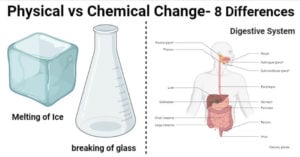
Physical vs Chemical Change- Definition, 8 Major Differences, Examples

June 4, 2021 by Jyoti Bashyal
Physical vs Chemical Change

Physical Change Definition A physical change is a process that changes the physical form of a substance but not its chemical composition. During a physical change, the molecules of a substance are rearranged, but the chemical composition of the substance … Read more

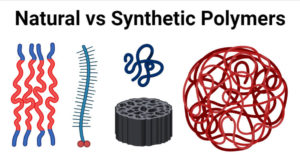
Natural vs Synthetic Polymers- Definition, 7 Key Differences, Examples

May 15, 2021 by Jyoti Bashyal
Natural vs Synthetic Polymers

Natural Polymers Definition Natural polymers are natural substances composed of large macromolecules formed by the binding of small molecules called monomers. Natural polymers occur in the form of chemical compounds in biological systems and can be broadly categorized into three … Read more

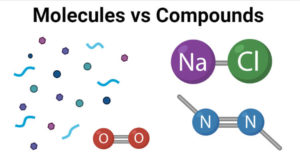
Molecules vs Compounds- Definition, 10 Major Differences, Examples

May 14, 2021 by Jyoti Bashyal
Molecules vs Compounds

Molecules Definition A molecule is a group of two or more atoms of the same or different atoms that represent the smallest identifiable unit of a substance that has the composition and chemical properties of the substance. Molecules are individual … Read more

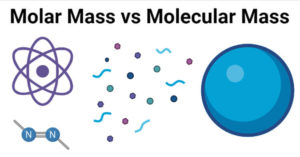
Molar Mass vs Molecular Mass- Definition and 6 Key Differences

May 12, 2021 by Jyoti Bashyal
Molar Mass vs Molecular Mass

Molar Mass Definition Molar mass is the mass of one mole of a substance obtained by the mass of a compound divided by the amount of the substance present in the compound. Molar mass is considered an average mass of … Read more

Older posts
Newer posts
← Previous Page1 … Page82 Page83 Page84 Next →

Topics

  • Astronomy (4)
  • Biology (18)
  • Book Reviews (1)
  • Chemistry (756)
  • Differences Between (70)
  • Events (2)
  • Journals (1)
  • Periodic Table (130)
  • Physics (125)
  • Science Facts (12)
  • Syllabus (5)
  • Top 10 in Science (14)
  • Universities (4)
  • Density and Pressure (A-Level Physics Revision Notes)
  • Equilibrium of Forces (A-Level Physics Revision Notes)
  • Turning Effects of Forces (A-Level Physics Revision Notes)
  • Linear Momentum and Its Conservation (A-Level Physics Revision Notes)
  • Non-uniform Motion (A-Level Physics Revision Notes)
  • About
  • Our Team
  • Contact Us
  • Editorial Policy
  • Privacy Policy
  • Cookie Policy
  • Disclaimer (Terms and Conditions)
© 2026 Science Info. Made with ā™” by Sagar Aryal.