Mass Defect and Nuclear Binding Energy
The mass defect is the disparity between the aggregate mass of each protons and neutrons in an atomic nucleus when evaluated separately and the actual mass of the nucleus. Experimental … Read more
Atoms behave in extraordinary manners when they encounter energy. A concept of energy levels, which are distinct states that electrons within an atom might occupy, is essential to explain atomic … Read more
A significant concept in quantum mechanics is wave-particle duality, which shows how light and particles can have both radiation and matter-like characteristics. Numerous robust tests, including the Davisson and Germer … Read more
Light has been proven to be both a wave and a particle, featuring a particle character known as a photon. In addition, this photon is a packet of wave or … Read more
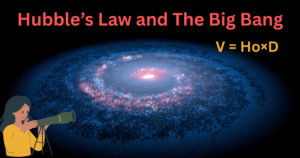
Photons were predicted to form between 10 seconds and 370,000 years after the Big Bang, which was considered the epoch of light formation. As the bearers of electromagnetic waves, photons are … Read more