Bleaching Agents: Types, Mechanism, Application

Bleaching Agents

Bleaching agents are the chemicals that lighten or whiten substances by dissolving colored substances or by changing its light-absorbing properties. Bleaching agents are commonly used in the paper and pulp industry, the textile industry, and the commercial and household laundering. … Read more

Lewis Structure of NH3

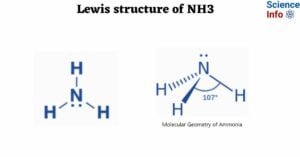
Lewis structure of NH3

Ammonia, or NH3, is a colorless, pungent gas made up of one nitrogen and three hydrogen atoms. It is a significant chemical molecule with numerous applications in agriculture, industry, and biology. Lewis structure of NH3 and it’s geometry are essential for understanding … Read more

Bond Cleavage: Homolysis and Heterolysis

Bond Cleavage

Bond cleavage is the dissolution of a chemical bond (usually a covalent bond). Covalent bond fission, or covalent bond breaking, can occur in two ways: i.e., Homolytic bond cleavage and Heterolytic bond cleavage. Homolytic bond cleavage Homolysis, also known as … Read more

Salt: Preparation, Properties, Types, Uses

Salt

Salt is defined in chemistry as an inorganic or organic molecule with ionic bonding. When dissolved in water, ions break down into positively charged cations and negatively charged anions. Positive ions (cations) and negative ions (anions) make up salts. Because a … Read more

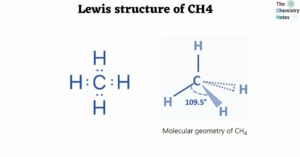
Lewis Structure of CH4

Lewis structure of CH4

The Lewis structure of a molecule depicts the arrangement of atoms and valence electrons. The Lewis structure of CH4 is a basic but important as it helps us understand the form and chemical activity of the molecule by highlighting the electron … Read more

Lewis structure of CO2

Lewis structure of CO2

Lewis structures are important because they make it easy to see how atoms are arranged in molecules and provide insight into how molecules interact. They are helpful in the prediction of a molecule’s polarity, structure, and reactivity as well as … Read more