Skip to content
Science Info
  • Home
  • Science Facts
  • Top 10 in Science
  • Resources
    • Astronomy
    • Biology
    • Chemistry
    • Periodic Table
    • Physics
    • Syllabus
    • Universities

Chemistry

Chemistry is the study of elements (such as atoms, molecules, compounds, ions, and so on) and their chemical composition, properties, structure, and chemical reactions.

  • Chemistry is also concerned with the chemical interaction (bonding) of elements, atoms, and molecules. It investigates the causes and consequences of bonding.
  • Furthermore, chemistry is concerned with the energies emitted or absorbed by various molecules.
  • Chemistry is the science that studies the properties, content, and structure of substances (specified as elements and compounds), as well as the transformations they go through and the energy released or absorbed during these processes.
  • Chemistry is one of the most fundamental fields of science, involved with the in-depth investigation of matter, its properties, composition (chemical), and application.
  • Chemistry is further classified into the following groups based on the materials, processes, and system types under research.
  • Organic chemistry: Organic chemistry is the study of life’s chemistry and the reactions that occur in living organisms. It includes the study of organic processes in addition to the structure and characteristics of chemical molecules that are mainly made of carbon and hydrogen.
  • This discipline of chemistry is concerned with the in-depth study of the structure, characteristics, and synthesis of chemical substances having carbon and hydrogen along with minor/trace elements such as sulfur, oxygen, and nitrogen.
  • Inorganic chemistry: The study of the characteristics and behavior of inorganic compounds such as metals, minerals, ceramics, crystal formations, catalysts, and the majority of elements in the Periodic Table is known as inorganic chemistry. It encompasses all ‘non-organic’ chemical substances found in nature. This branch is concerned with the in-depth investigation of the characteristics, production, and behavior of inorganic substances. The creation and behavior of inorganic or organometallic chemical compounds present in the earth’s crust and non-living materials are covered in this subject.
  • Physical chemistry: This discipline of chemistry studies the effect of chemical structure on the physical qualities of a substance, the rate of chemical reactions, the calculation of properties and structures, and the interaction of molecules with radiation. Quantum chemistry, photochemistry, spectroscopy, chemical kinetics, and surface chemistry are all subfields of physical chemistry.
  • Physical Chemistry is concerned with the ‘physical attributes’ of chemical compounds through the application of law and other physics concepts such as motion, energy, force, time, statistical mechanics, quantum chemistry, and thermodynamics.
  • Analytical chemistry: Analytical chemistry is the qualitative and quantitative examination of the chemistry of substances. It is a branch of chemistry that analyses, utilizes tools, and employs various procedures to separate, identify, and quantify materials. So, analytical chemistry is concerned with identifying and quantifying specific molecules.
  • Biochemistry: Biochemistry is the scientific investigation of biological processes at the cellular and molecular levels using chemistry. In this field of chemistry of living cells, tissues, organs, and organisms is addressed. Its primary goal is to comprehend how biomolecules link to a specific process (metabolism) within a living cell. It seeks to understand the structures, functions, and interactions of proteins, nucleic acids, carbohydrates, and lipids to facilitate life.

Chemical Reaction Kinetics (AS and A Level Chemistry)
July 3, 2026May 5, 2026 by Jyoti Bashyal
Reaction Kinetics/ Chemical Kinetics

Chemical kinetics, also known as reaction kinetics, is the subfield of physical chemistry concerned with the study of the rates of chemical reactions. Reaction kinetics is the study of chemical reaction rates. The data obtained from rate experiments can shed light … Read more
Brønsted-Lowry Acid Theory of Acids and Bases (A Level Chemistry Revision Notes)

July 13, 2026May 4, 2026 by Jyoti Bashyal
Brønsted-Lowry Acid Theory

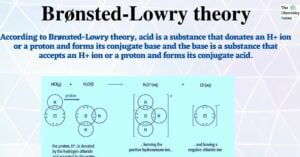
 The Brønsted-Lowry Acid theory is an extension of the Arrhenius theory of acids and bases. The Arrhenius theory states that in an aqueous solution, an acid will raise the concentration of H+ ions whereas a base will raise the concentration … Read more

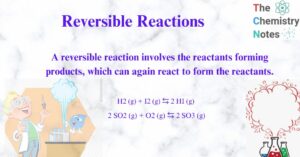
Reversible Reactions (A Level Chemistry Revision Notes)

July 13, 2026May 3, 2026 by Kabita Sharma
Reversible Reactions

A reversible reaction involves the reactants forming products, which can again react to form the reactants. Two separate reactions are going on simultaneously: the forward reaction, where the reactants become products, and vice versa. In such a reaction, the reactants … Read more

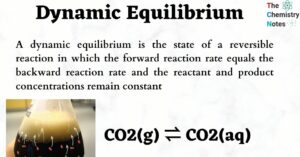
Dynamic equilibrium (A Level Chemistry Revision Notes)

July 13, 2026May 2, 2026 by Jyoti Bashyal
Dynamic Equilibrium

If the chemical equilibrium is the result of two active and opposing reactions, the system’s equilibrium is referred to as a dynamic equilibrium. Dynamic equilibria occur when there is no observable change in a reaction, but the system is still … Read more

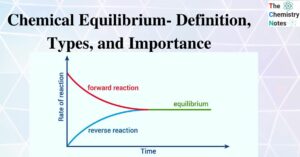
Chemical Equilibrium (A Level Chemistry Revision Notes)

July 13, 2026May 1, 2026 by Jyoti Bashyal
Chemical Equilibrium- Definition, Types, and Importance

Chemical equilibrium is defined as the state of a system in which the concentration of the reactant and the concentration of the products do not fluctuate over time and the system exhibits no additional change in properties. When the rate … Read more

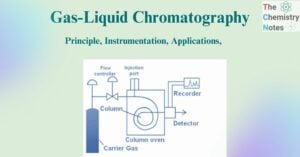
Gas-Liquid Chromatography (A Level Chemistry Revision Notes)

July 13, 2026April 30, 2026 by Kabita Sharma
Gas-Liquid Chromatography

Gas-Liquid Chromatography (GLC) is a separation methodology that employs a gaseous mobile phase, typically an inert gas like helium or a nonreactive gas like nitrogen, and a liquid stationary phase. The fundamental principle underlying separation is based on the difference … Read more

Thin-layer Chromatography (A Level Chemistry Revision Notes)

July 13, 2026April 29, 2026 by Jyoti Bashyal
Thin layer chromatography

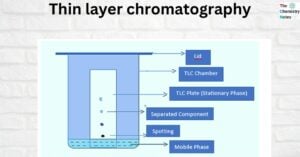
Thin layer chromatography (TLC) is one of the most useful tools in phytochemistry and biotechnology for monitoring the progress of organic chemical reactions and determining the purity of organic compounds. Like all chromatographic methods, TLC uses the analyte’s different affinity … Read more

Predicting the Type of Polymerization (A Level Chemistry Revision Notes)

July 13, 2026April 28, 2026 by Jyoti Bashyal
Predicting the Type of Polymerization

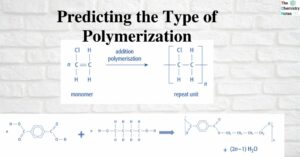
Regarding the prediction of the type of polymerization, before anything else, it’s critical to recognize the monomers’ primary functional groups. You may encounter a variety of polymer-related problems to solve: Predicting the type of polymerization reaction for given monomer(s) Addition polymers … Read more

Acyl chlorides (A Level Chemistry Revision Notes)

July 13, 2026April 27, 2026 by Kabita Sharma
Acyl chloride

Acyl chloride is an important derivative of carboxylic acid. It has an sp 2 hybridized carbonyl group with an O atom connected to a C atom through a double bond in a planar form with bond angles of about 120o.   It … Read more

Older posts
Newer posts
← Previous Page1 … Page4 Page5 Page6 … Page84 Next →

Topics

  • Astronomy (4)
  • Biology (18)
  • Book Reviews (1)
  • Chemistry (756)
  • Differences Between (70)
  • Events (2)
  • Journals (1)
  • Periodic Table (130)
  • Physics (125)
  • Science Facts (12)
  • Syllabus (5)
  • Top 10 in Science (14)
  • Universities (4)
  • Density and Pressure (A-Level Physics Revision Notes)
  • Equilibrium of Forces (A-Level Physics Revision Notes)
  • Turning Effects of Forces (A-Level Physics Revision Notes)
  • Linear Momentum and Its Conservation (A-Level Physics Revision Notes)
  • Non-uniform Motion (A-Level Physics Revision Notes)
  • About
  • Our Team
  • Contact Us
  • Editorial Policy
  • Privacy Policy
  • Cookie Policy
  • Disclaimer (Terms and Conditions)
© 2026 Science Info. Made with ♡ by Sagar Aryal.