Skip to content
Science Info
  • Home
  • Astronomy
  • Physics
  • Chemistry
    • Periodic Table
    • Analytical Chemistry
    • Basic Chemistry
    • Biochemistry
    • Computational Chemistry
    • Environmental Chemistry
    • Inorganic Chemistry
    • Nanochemistry
    • Organic Chemistry
    • Pharmaceutical Chemistry
    • Physical Chemistry
  • Biology
    • Plants
    • Animals
  • Science Facts
  • Top 10 in Science

Physics

Physics is the fundamental science that explores the structure of matter and the interactions between its basic constituents across the observable universe.

It delves into both macroscopic and submicroscopic realms, aiming to understand the behavior of objects under various forces and the origins of fundamental force fields such as gravity, electromagnetism, and nuclear forces. At its core, physics seeks to formulate comprehensive principles that unify disparate phenomena.

The subject of physics encompasses numerous branches, each focusing on specific aspects of nature. These branches have evolved to encompass a vast array of phenomena, providing insights into the workings of the physical world.

Among the traditional branches are classical physics, which includes mechanics, optics, acoustics, and electromagnetism.

  • Mechanics, a cornerstone of classical physics, investigates the motion of objects with or without the application of force. It comprises classical mechanics, which deals with the laws governing motion and forces, and quantum mechanics, which delves into the behavior of subatomic particles.
  • Optics, another branch, examines the behavior, propagation, and properties of light across the electromagnetic spectrum, including infrared, visible, and ultraviolet light.
  • Thermodynamics explores the relationships between heat, work, and energy, as well as the mechanisms of heat transfer through convection, conduction, and radiation.
  • Electromagnetism investigates the fundamental forces of electric and magnetic fields, encompassing phenomena such as electricity, magnetism, and light.
  • Relativity, as formulated by Albert Einstein, fundamentally redefines our understanding of space and time, proposing that they are relative and dependent on the observer’s frame of reference.
  • Acoustics focuses on the study of sound waves and their transmission, production, and effects in various mediums, including gases, liquids, and solids.

Each branch of physics contributes to our understanding of the universe, addressing questions ranging from the origins of the cosmos to the behavior of subatomic particles.

Through continuous exploration and experimentation, physicists strive to open the mysteries of nature and uncover the underlying principles governing the physical world.

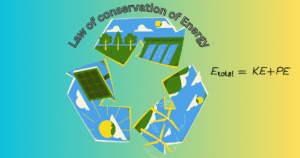
Laws of Conservation of Energy and Energy Transformations
July 27, 2025July 11, 2025 by Rabina Kadariya
conservation of energy

The laws of conservation of energy are basically the principles, governing all the energies existing in the universe. The statement of the law is given for a closed system as ‘energy can neither be created nor destroyed-it transforms from one … Read more
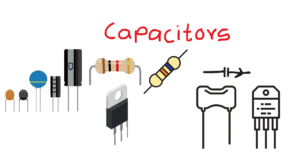
Capacitor: Principle, Types, Applications, Examples, Safety

July 30, 2025July 10, 2025 by Rabina Kadariya
Cap

An electric charge is stored in an electric field by a simple electric device called a capacitor. A dielectric material separates the two conductive plates that jointly make a capacitor. An electric potential difference arises from the plates becoming oppositely … Read more

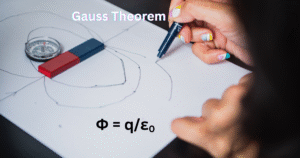
Gauss Theorem: Principle, Applications, Examples, Diagrams

July 30, 2025July 9, 2025 by Rabina Kadariya
Gauss Theorem

What Is Gauss’s Theorem? Gauss’ Law is an equation or formula which was developed to describe the relation between electric charge and electric field in a stationary condition. This law becomes easier to use when the charge distribution over a … Read more

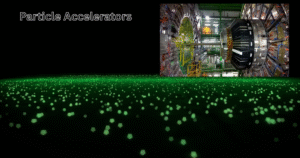
Particle Accelerators: Principle, Types, Applications, Examples

July 30, 2025July 8, 2025 by Rabina Kadariya
Particle accelerator

A particle accelerator is a device that creates a beam of atomic or subatomic particles that move quickly and are electrically charged. Accelerators are used by physicists for basic research on the elements of nuclei, the nature of nuclear forces, … Read more

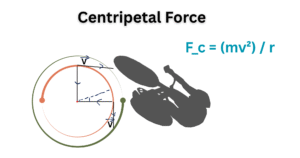
Centripetal Force: Principle, Examples, Applications, Experiments

July 30, 2025July 7, 2025 by Rabina Kadariya
Centripetal Force

What Is Centripetal Force? Centripetal force is the force that arises due to the change in direction of an object having circular motion. Its direction is such that the motion of the object is directed towards the center. The name … Read more

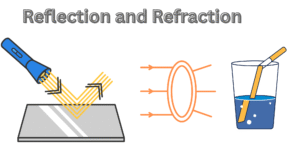
Reflection and Refraction: Differences, Examples, Uses

July 30, 2025July 6, 2025 by Rabina Kadariya
Reflection and Refraction

Light has some interesting phenomena when passing through different objects. The characteristics of light are even peculiar when we observe in different media. Here, we will deal with two phenomena of light: Reflection and Refraction which are integral parts of … Read more

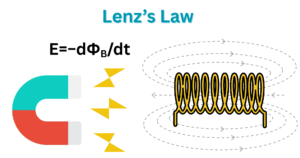
Lenz’s Law: Principle, Examples, Applications, Experiments

July 30, 2025July 5, 2025 by Rabina Kadariya
Lenzs law

Electromagnetism is applied to a wide range of daily circumstances to advanced technologies in science. Lenz’s Law is a primary idea in the realm of electromagnetic induction. It provides information about electromagnetic forces. This article goes briefly through Lenz’s Law … Read more

Nuclear Reactors: Principle, Types, Uses, Examples, Risks

July 30, 2025July 4, 2025 by Rabina Kadariya
Cap 1

What Is a Nuclear Reactor? A nuclear reactor was built with the aim of running, directing, and carrying out a nuclear chain reaction, which causes massive amounts of energy getting produced. In a nuclear power plant, it is the main focus … Read more

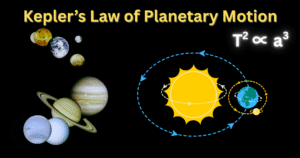
Kepler’s Law of Planetary Motion: Origin, Applications and Limitations

July 30, 2025July 3, 2025 by Rabina Kadariya
Keplers law

Introduction to Kepler’s Laws of Planetary Motion A basic notion in physics including astrophysics, Kepler’s Law of Planetary Motion render a mathematical framework for comprehending how planets revolve the Sun. These mathematical principles, which Johannes Kepler developed in the early … Read more

Older posts
Newer posts
← Previous Page1 … Page8 Page9 Page10 Page11 Next →

Topics

  • Analytical Chemistry (164)
  • Animals (2)
  • Astronomy (4)
  • Basic Chemistry (144)
  • Biochemistry (38)
  • Book Reviews (1)
  • Botany (2)
  • Computational Chemistry (4)
  • Differences Between (70)
  • Environmental Chemistry (31)
  • Events (2)
  • Inorganic Chemistry (183)
  • Journals (1)
  • Nanochemistry (17)
  • Organic Chemistry (177)
  • Periodic Table (130)
  • Pharmaceutical Chemistry (15)
  • Physical Chemistry (199)
  • Physics (99)
  • Plants (13)
  • Science Facts (12)
  • Syllabus (5)
  • Top 10 in Science (14)
  • Universities (4)
  • Zoology (1)
  • Pulley (Simple Machine): Parts, Principle, Types, Examples, Applications
  • Lever (Simple Machine): Parts, Principle, Classes, Examples, Applications
  • Simple Machines: Principle, Types, Examples, Applications
  • Elasticity vs. Plasticity: Definition, Differences, Examples
  • Plasticity: Principle, Types, Factors, Applications
  • About
  • Our Team
  • Contact Us
  • Editorial Policy
  • Privacy Policy
  • Cookie Policy
  • Disclaimer (Terms and Conditions)
© 2026 Science Info. Made with ♡ by Sagar Aryal.