
Medical device manufacturing is a sensitive process, and for devices such as implants and pacemakers, even a small amount of contamination by dust, microbes, or skin cells poses a significant threat to the product’s quality, potentially affecting life and death.
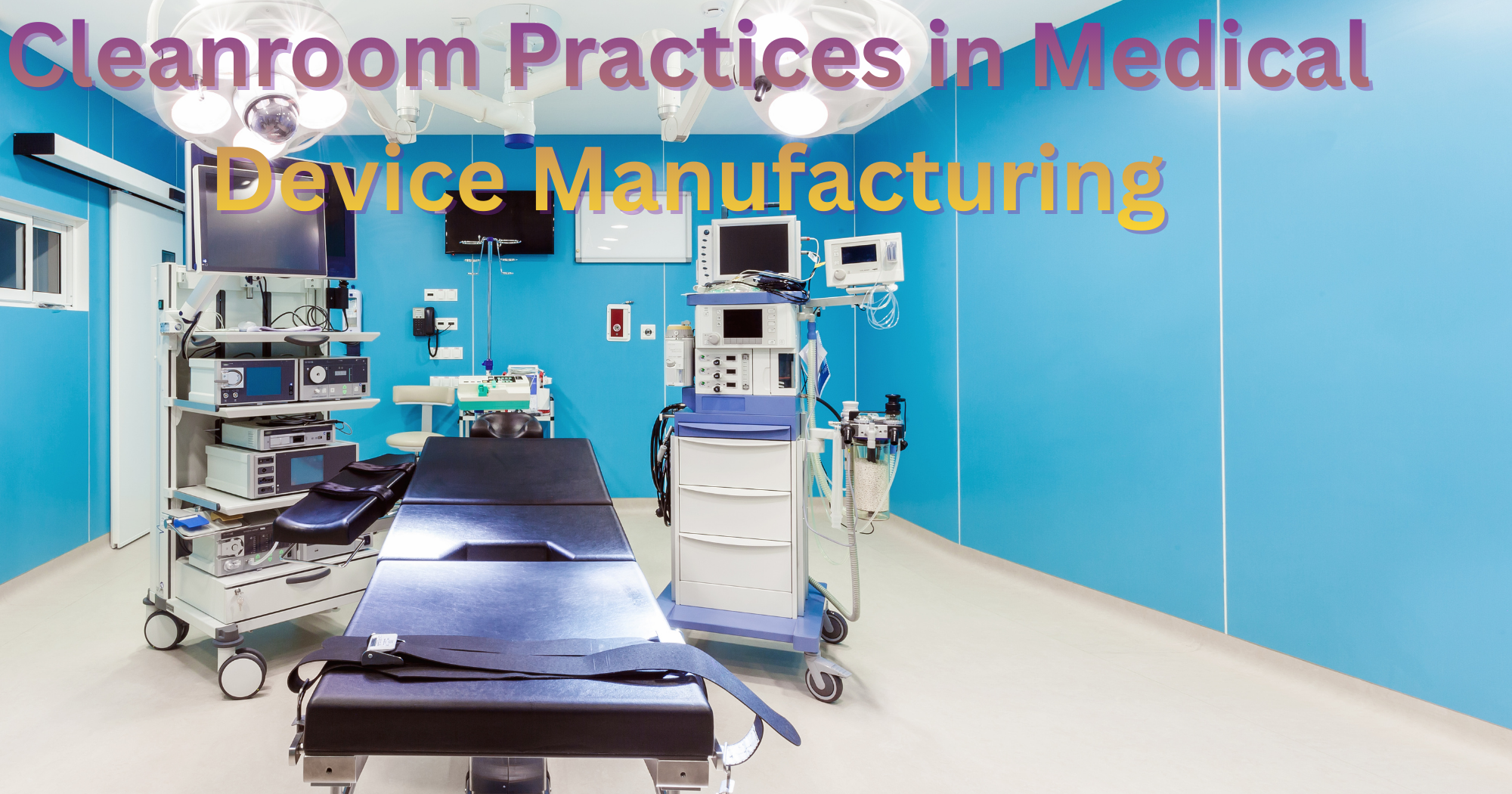
So, to ensure these products are safe and free of any kind of contamination, manufacturers must engineer controlled environments known as cleanrooms.
Overview of Cleanroom Technology
Cleanrooms are segregated enclosed spaces with controlled temperature, pressure, air flow rate, and, most importantly, controlled concentration of airborne particles to minimize the introduction, generation, and retention of contaminants. The major parameters that are controlled include: airborne particles, microbial levels, airflow patterns, air change rate, pressure differentials between rooms, temperature, and relative humidity. Not only that, but modern cleanrooms for medical device manufacturing also integrate smooth, non-porous surfaces on walls, floors, and ceilings to facilitate easy cleaning and prevent particle accumulation. All controlled parameters work together to protect products from microbial and particulate contamination during critical manufacturing steps.
ISO 14644-1 Classification Standards
ISO 14644-1 is an international standard that guides medical device manufacturers in classifying cleanrooms based on the concentration of airborne particles. It defines what “clean” is based on the number of particles per cubic meter. It specifies clean room classes from ISO 1-9, where ISO 1 is the cleanest and ISO 9 is the least clean. For the medical device industry, ISO class 5 through ISO class 8 are most relevant.
| ISO Class | No. of particles (≥ 0.5 µm) |
| Class 5 | ≤ 3,520 |
| Class 6 | ≤ 35,200 |
| Class 7 | ≤352,000 |
| Class 8 | ≤3,520,000 |
Many medical device and pharmaceutical facilities use ISO class 5 in critical work zone such as final assembly of sterile products, ISO class 6 and 7 in less critical stages of production, and ISO 8 in the general surrounding areas.
Cleanroom Design and Airflow Principles
Cleanroom design aims to minimize contaminants by controlling the air movement in the room. It aims to keep clean air in the room and sweep contaminants away. The major principles are:
- Air filtration: HEPA (High-efficiency particulate air) or ULPA (Ultra-low penetration air) filters must be used to remove particles and microbes from the supplied air.
- Air flow patterns: There are two major airflow principles in cleanroom design. Unidirectional or laminar flow, where air moves in a single direction at a consistent velocity to seep contaminants away from the product. It is mandatory for critical areas (e.g., ISO 5 work zones). Non-unidirectional or turbulent flow, where diffusers are used to mix filtered air with existing room air to dilute the concentration of particles in the air. It is suitable for less critical areas like support areas.
- Pressure differentiation: Pressure differential among rooms is one of the major principles. Clean zones must be maintained at a higher pressure (at least 10 Pa higher) than adjacent less-clean areas, such that air leaks outward, not inward.
- Cleanable structure design: The walls, floors, ceilings, and surfaces should be smooth, non-shedding, and easily disinfected to reduce particle generation and microbial residence in these places.
Gowning and Personnel Hygiene
In clean rooms, people are the most probable source of microorganisms and particles because humans harbor organisms in their skin, and their clothes from outside act as vehicles. So robust gowning protocols and hygiene protocols should be followed by personnel working in these cleanrooms. For maintaining cleanrooms, having segregated changing and gowning rooms with a differentiated “dirty” side and “ambient” or “clean” side is suggested. There are appropriate garments necessary according to the class or grade of the cleanroom. This includes hood, coverall, mask, overshoes, and gloves. These garments should be laundered weekly or as necessary to ensure they shed minimally. To minimize contamination, gowning procedures are designed which includes order of donning, hand hygiene, sanitization, etc. The personnel must also be provided with training about the importance and procedure of gowning and hygiene.
E.g., for an ISO class 8 environment, gowning typically consists of donning a cap or hood to contain hair, a face mask to reduce respiratory droplets, wearing shoe covers, wearing an overall coat, and gloves. For an ISO class 5 environment, the process is more rigorous, and sterile conditions should be maintained.
Contamination Control Strategies
Regulatory authorities require an organization to have effective contamination control in place. Contamination Control Strategies (CCS) is a documented framework that provides strategies to eliminate any source of contamination. It combines engineering controls, procedural control, and technology. Engineering controls include cleanroom design, HEPA filtration, controlled air flow, pressure differentials, and barriers or isolators. Procedural controls are processes such as gowning, validated cleaning and disinfection, controlled personnel movement, and strict behavioral rules. Technological improvements include the integration of automation or AI in real-time contamination controls to reduce human intervention in high-risk product manufacturing. It is based on Quality Risk Management.
Cleaning and Disinfection Protocols
Only preventing the entry of contamination and gowning is not effective if there is no proper procedure for routine cleaning and disinfection. Systematic cleaning protocols first perform cleaning, followed by disinfection. Cleaning is done using detergents that remove dust, dirt, and other debris formed during the production process. Disinfection is performed using disinfectants, sporicidal, and bactericidal agents. Rotation of different disinfectants should be done to reduce resistant strains and biofilm formation.
The cleaning procedure and the cleaning equipment must be validated to ensure their effectiveness. Cleaning validation should show that residues are below predefined limits and will not compromise product quality. Periodic cleaning, documented schedules, clear responsibilities, and training are necessary to maintain consistent practice.
Environmental Monitoring Programs
Environmental Monitoring (EM) programs verify that all the controls in the cleanroom are in accordance with the predefined standard. This is not only necessary during initial ISO certification, but it should be monitored periodically during processes to ensure product quality. It includes:
- Non-viable particle count to measure airborne particles to verify ISO/GMP limits in critical areas.
- Viable particle count to measure microbes in air by active air sampling, settle plates, surface contact plates, and surface swabbing.
- Monitoring of critical parameters like pressure, temperature, relative humidity, and other physical parameters.
The observations are documented, and trends over the years are analyzed to drive improvements in cleaning, disinfection, and working methods.
Material Transfer and Airlocks
Transferring materials into the clean rooms is a high-risk process that might introduce contaminants into the clean areas. To ensure the safe transfer of materials, airlocks are constructed within the establishment. These airlocks act as contamination “buffers”. These are small rooms with interlocking doors, designed so that neither door can be opened at the same time. Airlocks may be personnel airlocks, where personnel gown and enter the clean room, and material airlocks, through which necessary materials are passed into the clean room. Additional processes of material decontamination, like wiping with disinfectant, sanitizing, etc., are performed in airlocks to reduce microbial contamination. Airlocks are also maintained with pressure differentials so that the dirty air doesn’t rush through into the cleanroom.
Behavioral Guidelines for Personnel
As we have already established, personnel are crucial in production, yet most likely to introduce contamination. Gowning only is not enough, personnel should also be trained about behavioral aspects and follow “cleanroom discipline”. GMP and Annex 1 have provided behavioral guidelines for personnel to maintain cleanroom conditions. It emphasizes restricted access in cleanroom areas for only trained and qualified personnel. Staff should also avoid sudden or sweeping movements to not disturb the air flow, and also keep their movements minimal. The rooms should not be overcrowded, and the number of people that can be present in the room should be taken into consideration. Eating, drinking, cosmetics, jewelry, or any personal items are restricted in the clean areas. Any breaches, such as a tear in a gown, accidental touches, or equipment failure, should be reported promptly. The personnel working with devices should avoid touching their face or mask, sanitize their hands before starting any work, and minimize talking in critical areas. They should be trained properly and deliberately to make them understand how their body can be a primary source of contamination and how the facility can be compromised by poor human behavior. Their behavior is reinforced by training, SOPs, and supervision.
Regulatory Compliance (FDA, GMP, Annex 1)
Regulatory bodies require medical device and medicinal product manufacturers to use cleanrooms for aseptic processing. The key frameworks are:
- FDA: The Food and Drug Administration (FDA) provides guidelines for aseptic processing in the US. It emphasizes the use of cleanrooms for sterile product manufacturing and focuses on facility design, environmental controls, environmental monitoring, and process validation. So, facilities are built to meet FDA cGMP and ISO cleanroom classifications.
- GMP: It provides organizations with guidelines regarding resource management, facility design, and personnel behavior, resource management, and facility hygiene. These are the core practices required to ensure consistent production. This is now known as cGMP under the FDA.
- EU GMP Annex 1(2022): Revised in 2022, it focuses on contamination control strategies and defines cleanroom grades linking them to ISO 14644-1 classification. It emphasizes periodic reclassification of rooms, routine EM, and team requirements for classification.
Conclusion
Cleanroom practices for the medical device industry depend upon a robust facility, proper airflow design, disciplined personnel, well-defined procedures, and continuous monitoring and improvement. ISO 14644-1 provides a framework for the classification of the cleanroom and its requirements. GMP and Annex 1 translate these classes into practical requirements for gowning, cleaning, EM, and behavior. For manufacturers, the priority must not be to achieve only an ISO class on paper but to maintain a stable, well-understood, and verified control system. This protects patients, supports regulatory compliance, and enables safe innovation in an increasingly complex and high-risk medical device industry.
References
- Eaton, T., & Lenegan, N. (2023). EU GGMP Annex 1 2022 and Pharmaceutical Cleanroom Classification—Consideration of the changes from EU GGMP Annex 1 2008. EJPPS EUROPEAN JOURNAL OF PARENTERAL AND PHARMACEUTICAL SCIENCES. https://doi.org/10.37521//ejpps.27402
- Eaton, T. (2020). Pharmaceutical Cleanroom Classification using ISO 14644-1 and the EU GGMP Annex 1 Part 1: Testing rationale. EJPPS EUROPEAN JOURNAL OF PARENTERAL AND PHARMACEUTICAL SCIENCES. https://doi.org/10.37521/ejpps.24401
- Eaton, T. (2020). Pharmaceutical Cleanroom Classification using ISO 14644-1 and the EU GGMP Annex 1Part 2: Practical Application. EJPPS EUROPEAN JOURNAL OF PARENTERAL AND PHARMACEUTICAL SCIENCES. https://doi.org/10.37521/ejpps.24402
- Wang, F., Permana, I., Lee, K., Rakshit, D., & Rosulindo, P. P. (2022). Improvement of Airflow Distribution and Contamination Control for a Biotech Cleanroom. Atmosphere, 13(2), 335. https://doi.org/10.3390/atmos13020335
