
Good Manufacturing Practices (GMP) are essential, globally recognized guidelines that ensure medical devices are consistently produced, safe for patients, fit for use, and comply with relevant regulations.
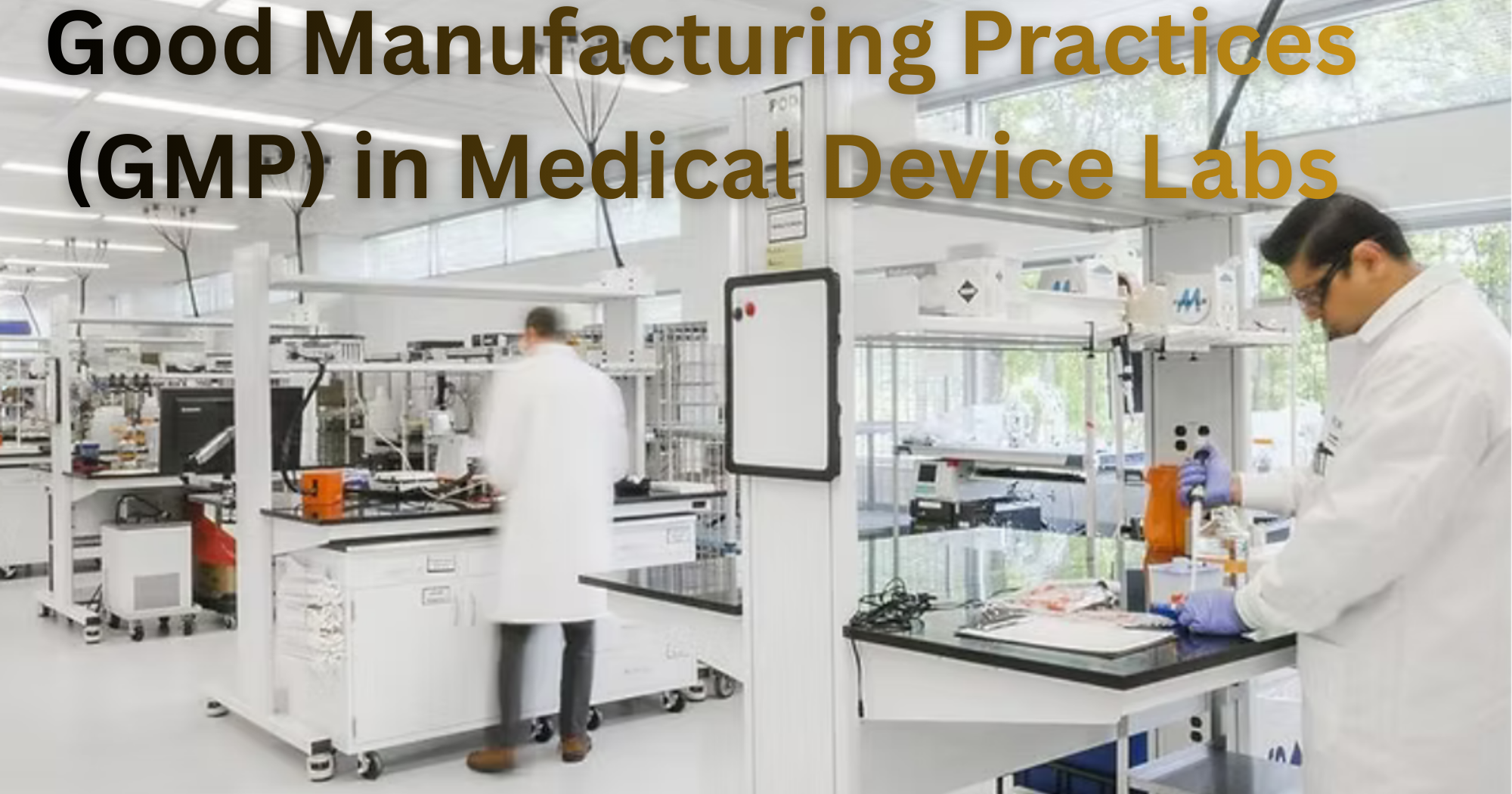
It ensures products have a high standard of quality, safety, and performance by minimizing risks like contamination or defects.
Overview of Good Manufacturing Practices
GMP is a component of QMS that focuses on manufacturing products consistent with the quality standards required by regulatory authorities and fit for their intended use. GMP iterates that only final product testing is not enough to produce safe products and emphasizes the implementation of in-process testing. GMP covers all aspects of production: facilities, equipment, materials, people, documentation, and quality control.
Based on intended use, risk, and potential patient harm, the FDA GMP classifies medical devices into three classes. Class I are low-risk devices, Class II are moderate risk, and Class III are high risk. The focus of GMP is dependent on what kind of device is being produced and is stricter for high-risk products.
Principles of GMP in Medical Devices
The core principle of GMP for Medical devices revolves around having a documented quality system, risk-based control, trained personnel, adequate environment and equipment, validated processes, and efficient documentation and complaint handling. The key aim is always to prevent harm to users and ensure high-quality products. The major principles of medical devices are as follows:
- Quality Management System: GMP requires a manufacturer to have a robust QMS in place throughout the product lifecycle. It primarily recommends ISO 13485 as QMS for medical devices, with ISO 14971 serving as a supplementary standard for risk management.
- Personnel: Properly trained and competent employees are essential for smooth operation, so training should be adequate.
- Facilities and Equipment: GMP requires the industry to have adequate resources for the production of intended quality goods and validated and calibrated equipment to ensure that everything is in accordance with specifications.
- Materials Management: GMP requires effective management to prevent shortages, material wastage or expiry, and overstocking.
- Documentation and Record Keeping: Keeping properly documented records for traceability is an essential component of GMP.
- Quality Control and Testing: To ensure that the products meet the specified requirements, various tests should be performed in-process as well as for the final product.
The key components of GMP that are relevant to the medical device labs are: Quality system to ensure consistent, controlled processes, Premises and environment to prevent contamination and mix-ups, Equipment for accurate, reliable measurements and processing, competent Personnel with good hygiene, Documentation to ensure traceability, and Complaints and CAPA to detect, investigate, and correct problems. These are separately explained below:
Facility Design and Environmental Control
GMP instructs manufacturers to have proper facility design, maintenance, and cleanliness to prevent contamination and mix-ups. It requires labs to have segregated areas for different stages of production and for different products to prevent cross-contamination. It also requires the facility to have HVAC, i.e., Heating, Ventilation, and Air-conditioning to ensure controlled temperature, pressure, and filtered air supply. It stipulates the use of cleanrooms for critical processes, especially for sterile or high-risk medical devices. So, proper layout design of facilities for efficient production flow and environments matching the cleanliness requirements is non-negotiable. For sterile devices, labs must ensure bacterial or particulate count in their cleanrooms and ensure little to no risk of contamination.
Equipment Calibration and Maintenance
GMP requires manufacturers to ensure that the equipment being used is suitable for its intended use. For this, the equipment must be maintained periodically according to document schedules and calibrated regularly against known standards. Failure to do so may result in incorrect measurements, non-conforming products, or unnoticed process drifts. These inspections help identify problems with equipment or processes that can be improved to ensure minimum risk. So, devices and equipment used in production as well as testing must be calibrated, maintained, and validated time and again.
Personnel Training and Hygiene
People are central to the production process, and competent and well-trained staff are necessary for GMP. The personnel must understand the principles of GMP, procedures relevant to them, and products associated with their work. GMP emphasizes that the person must understand clearly their roles, responsibilities, and authority, and maintain hygiene and growing practices necessary according to their work, especially in classified clean areas. Lack of trained personnel is a major challenge in GMP implementation, and mostly for high-risk device manufacturing labs.
Documentation and Record Keeping
The core principle of GMP is that if it’s not documented, then it’s not done. So, documentation is a must as it ensures traceability, supports investigation, and demonstrates compliance to regulators. Documentation mainly includes documents such as policies, quality manuals, SOPs, records of training, equipment calibration, batch records, test results, deviations, investigations, and non-conformance reports. GMP documents are a backbone for quality assurance, and it must be legible, accurate, and retained for defined periods.
Production and Process Controls
All the procedures should be clearly defined as mandated by QMS. GMP requires that all the production and test processes are controlled, validated, and followed to ensure consistent products within requirements for every batch. This includes defined specifications for materials and components, controlled procedures for critical steps, and change control and revalidation when processes or equipment change. It also includes in-process controls and final inspection of the finished product. Risk-based approach and in-process quality, i.e., quality is built into the system, not inspected at the end, are widely promoted.
Complaint Handling and Corrective Actions
Systems must track complaints, unusual events, and non-conformities, evaluate the root cause of problems, and strive to solve them by implementing corrective and preventive actions (CAPA). This, in turn, stops recurrences and improves processes. Any deviations and CAPA procedures must be documented for future reference. Effective CAPA systems are critical for regulatory trust and minimizing patient risk. Timely reports from inspection by quality control ensure that risks are minimized early by applying systematic improvements.
Regulatory Frameworks (USA, Canada, Australia, UK)
- USA: GMP for devices appears as cGMP (current GMP) in CFR Part 820 originally under the Federal Food, drug and Cosmetic Act.
- Canada: Device manufacturing labs must implement ISO 13485-aligned quality systems. Advanced therapeutic products like cell products follow a more pharmaceutical/biologics GMP. The strictness depends on the risk of the product.
- Australia: In Australia, the Therapeutic Goods Administration (TGA) enforces a code of good manufacturing practice for medicinal products, which is aligned with ISO 13485 and other international guidance.
- UK (and EU): Device GMP is embedded into ISO 13485 and EU/UK regulatory frameworks.
Across countries, regulators emphasize risk management, product lifecycle quality systems, and international harmonization for global trade and safety.
Preparing for GMP Inspections
GMP inspections occur to assess whether facilities, equipment, systems, documentation and records, and production controls meet regulatory standards. For manufacturers to be ready for GMP inspection, they should:
- Perform routine internal audits and self-inspections to be in an always-ready state.
- Train personnel enough so that they are capable of explaining their processes and documents.
- Prepare clear procedures for receiving inspectors, handling document requests, and addressing observations.
Conclusion
GMP in medical device laboratories is fundamentally about integrating quality into every stage of production, from development through testing and production. A robust quality system, efficient premises and equipment, trained and hygiene-conscious staff, proper documentation and record-keeping, process control, and an effective CAPA system and complaint handling work together to ensure patient safety and high product quality. It also helps to uphold regulatory trust. For device labs, aligning internal practices with international GMP and ISO 13485 expectations not only reduces the risk of defects but also facilitates global market access and supports innovation.
References
Good Manufacturing Practices. (n.d.). Retrieved March 1, 2026, from https://www.who.int/teams/health-product-policy-and-standards/standards-and-specifications/norms-and-standards/gmp
Sharma, A., Gamta, V., & Luthra, G. (2023). The Importance of Good Manufacturing Practices (GMP) in the Healthcare Industry. Journal of Pharmaceutical Research International, 35(18), 75–90. https://doi.org/10.9734/jpri/2023/v35i187394
Understanding GMP Medical Devices—Design and Development. (n.d.). ComplianceQuest: AI-Powered PLM, QMS, EHS & SRM Platform. Retrieved March 1, 2026, from https://www.compliancequest.com/gmp-medical-devices/
