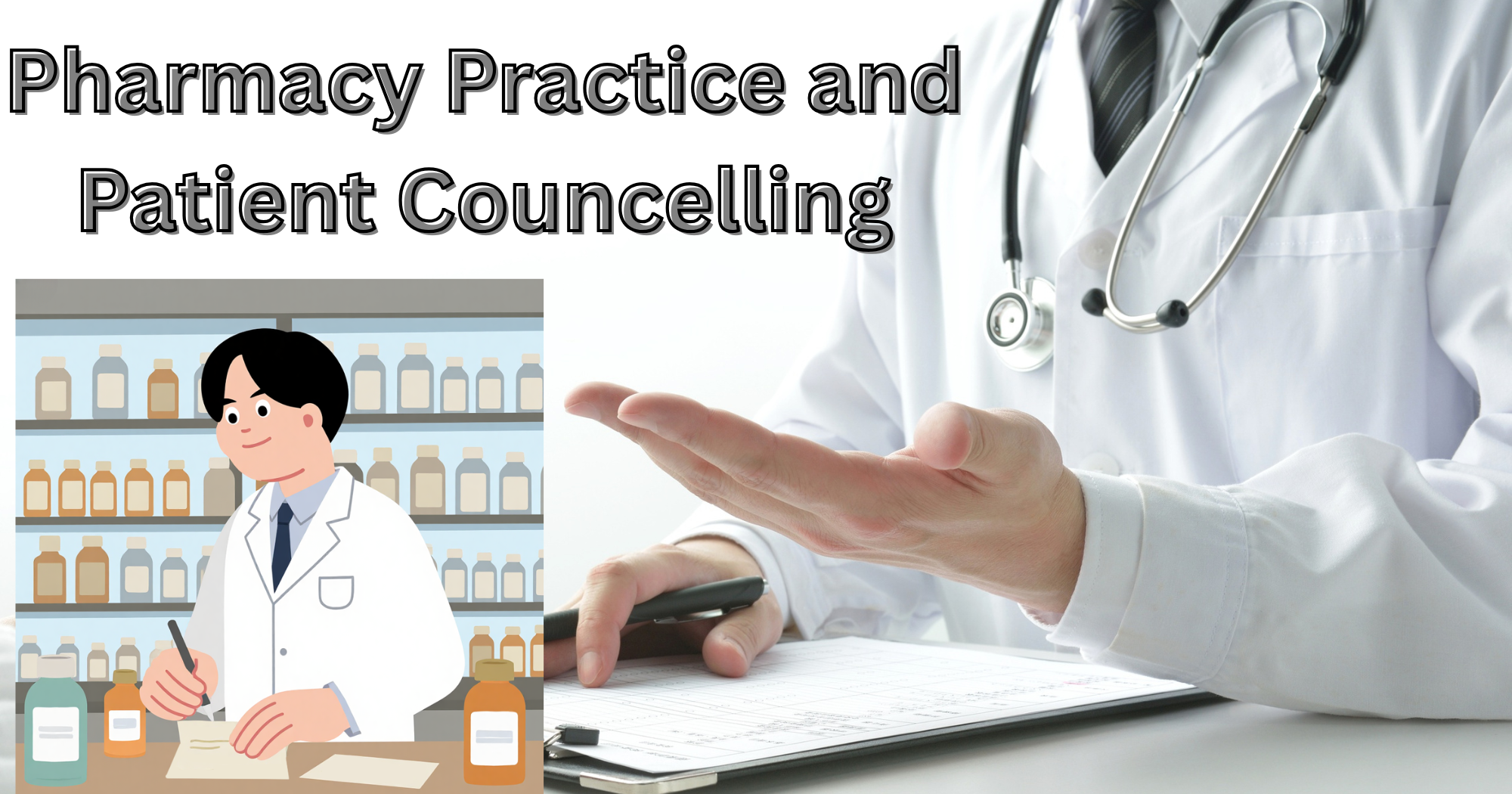
Pharmacy practice is the discipline of pharmacy associated with direct interaction with the patient for the betterment of pharmaceutical care services like therapeutic drug monitoring, patient-centered care, medication adherence, patient counseling, education and training, drug management and inventory control and all the functions of pharmacist in pharmacy settings.
The aim of pharmacy practice involves the safe, effective, and rational use of drugs which optimizes the use of medication to achieve the best health care outcomes for patients and promotion of public health. The pharmacy practice knowledge provides a huge range of career opportunities such as Production & manufacturing, Research & development, Analysis & testing, Marketing, Hospital pharmacy, Community pharmacy, Clinical pharmacy, Academics, Regulatory Affairs, Journalism and Documentation. In Nepal, pharmacy practice was regulated by Nepal Pharmacy Council and governed by the Department of Drug administration under Drug Act 2035 B.S.
The Shift from Dispensing to Clinical Care
In the past century, the pharmacy profession covered mainly compounding but it significantly reduced and consisted in dispensing procedures (drug seller). However, a shift of role from medication dispensing to a patient-centered clinical approach was not with the snap of a finger, it took a period of time. Pharmacists were more engaged as the gatekeepers of medications, responsible for prescribing the safe and accurate drugs but in the transition days due to increase in chronic conditions, complexities in health care sectors and demand of personalized patient- centered care, clinical pharmacists were no longer confined to the role of medication dispenser but they are now contributing proactively to therapeutic decision making, involved in improving patient education, pharmacovigilance and optimizing drug therapy as an essential member of the healthcare team. Pharmacists are now a forefront member of treatment planning.
History
In the UK there were early practitioners who compounded and dispensed remedies called Apothecaries. Ancient practices are the base of modern pharmaceutical practice and general medicine. But later a split occurred and pharmacists became primarily responsible for the dispensing aspects, extemporaneous preparations and with reduction of advisory functions. In 1948 National Health Service shifted the pharmacist’s role by introducing free prescriptions, which caused an increase in time spent by pharmacists in the dispensing of the medicines.
But in 1979 NHS felt the need to review the future of pharmacy and vision, and a conceptual framework was prepared in later years. In 1995 Pharmacy in a new age (PIANA) invited all the members for their contribution on the council (The New Horizon) which was launched in 1996. The council described four areas for the pharmacy practice i.e. Management of prescribed medicines, Management of chronic conditions, Management of common ailments and Promotion and support of healthy lifestyles. In 2000 Patient Group Directions was formed which allowed prescribing rights for pharmacists, alongside nurses and some other healthcare professionals.
Roles of Pharmacist in the clinical care:
- Medication Dispensing in accordance with prescribed instruction,
- Medication labeling and counseling on dosage instructions, potential side effects and any other necessary information,
- Extemporaneous dosage preparations and personalized medication,
- Pharmacovigilance and drug safety monitoring,
- Medication therapy management and development of comprehensive treatment plans as an essential part of the health care team, etc.
Principles of Effective Communication
Effective Communication is a key to medicine adherence, safe and effective use of medicine and quality of life in the form of counseling from health care practitioner to a patient.
Information is provided to the patients or their care-giver verbally or non-verbally (in written form) on diseases, directions on use of drugs, advice on side effects, precaution of use, storage and diet and lifestyle modifications. These information have principles:
- Listening Skill of Pharmacist: Active listening of pharmacist (hearing, understanding and judging).
- Use of open and closed ended questions: Closed ended questions like precipitating/ palliative factors, quality/ quantity, reason/ radiation/ related symptoms, severity and timing which requires one of two answers either YES or NO whereas, open ended questions allows patients to respond in their own way.
- Empathy (Assertive Behavior): Understanding the emotions and feelings of patients for better communication and responding.
- Clear Communication: Clear and Simple communication without using technical jargons during communication.
- Non-verbal communication: Non-verbal communication is more than talking, means how the way it is said and what the body language a person is using during communication. Such as facial expression, gestures, body posture and vocal intonations.
- Checking patient understanding: Asking patients to repeat the main points and if there are any doubts or questions. Summarizing the main points for better understanding.
Patient Counseling Models (IHS, USP, and ASHP)
Several techniques and modes can be adopted for effective counseling. Some of them provide written information to the patient about the medication and the use of audiovisual materials for better adherence. The use of various compliance aids including labeling, medication calendars, drug reminder charts and providing special medication containers and caps.
The United States Pharmacopoeia (USP) medication counseling behavior guidelines divide medication counseling into the following four steps:
- Step I: Information is gathered from the question answer session from the patient. Information such as patient name, current/past medical issues, allergies or any other patient related questions are gathered.
- Step II: Pharmacist answers questions and provides detailed information on drugs that are prescribed to patients and their uses.
- Step III: Pharmacist provides comprehensive information regarding the proper use of medicines in a collaborative, interactive learning experience on potential side effects, storage requirements, missed dose instructions, interaction precautions, and diet or lifestyle advice.
- Step IV: This is an ending step where counseling on medication is provided and patient understanding is checked.
The Indian Health Service (IHS) model uses three important questions:
- What did the doctor tell you this medication is for? (Answer about indication and purpose of medicine)
- How did the doctor tell you to take it? (Answer about dose and administration instructions)
- What did the doctor tell you to expect? (Answer about potential side effects/ risk vs. benefits)
The American Society of Health-System Pharmacists (ASHP) model aims on improving consistency and medicine adherence:
- Assessing patient understanding by asking open ended questions.
- Providing verbal and written information, such as labels, medicine leaflets and pictographs.
- Encouraging patient openness and question back.
- Documenting counseling sessions and making a reference for future care.
Improving Medication Adherence and Compliance
WHO defines Adherence as ‘the extent to which a person’s behavior in taking medication corresponds with agreed recommendation from a health care provider’. Whatever the efficacy of a drug, it cannot act unless the patient takes it; so medication adherence is important. The medication adherence breaks down mostly when drug is not filled on time, drug not started on time and not completed on time.
The dimensions for improving Medication Adherence and Compliance are:
- Communicating with Patients and Educating them
The education strategy, behavior interventions, patient counseling and identifying reasons for medication non adherences are answered in this section of medication adherence. Answers of WH questions (what, why, when, how) should be clearly explained. In certain conditions compliance can be improved by educating patients about their disease condition and necessity of medication for the treatment. The common side effects while using a drug should be explained.
- Dosing simplification and minimization of adverse effect
Many patients avoid using drugs due to complex regimen. Combination dosage form for multiple prescriptions, reduced or different dosage for different conditions and dosage calculation before dispensing is the key to adherence and compliances.
- Preparing a dosing cards
For the patient who uses many medications or who have cognitive barriers, preparing a dosing card is beneficial. The most essential elements are preferred during an entry in dosing cards such as drug information sheet, time of dosing and medication chart for different medications.
- General Reminders and follow up
Reminders through calls, texts, or e-mails are helpful, especially those with busy lifestyles. For both in-patients and out-patients, supervision by caregiver or nurses or doctors or relatives of patients is important for medication adherence and compliances.
Addressing Health Literacy and Cultural Barriers
Health literacy is an important aspect of healthy living which ensures patients finding, understanding, and use of medication information to manage their health and well-being. Cultural perspective spirituality is the main source of miscommunication. To overcome the cultural difference pharmacists should address the patients with empathy and belief, using plain language, visual aids, and the “teach-back” method to stick with medication adherence and nullify the errors. Patient centered care should be provided that respects the patient preference and cultural belief without hampering the cultural identities.
To overcome the cultural barrier academic and educational training, GPP implementation and special occasional training to the pharmacist should be provided to understand, respect and adapt the cultural differences.
Counseling for Special Populations (Pediatrics and Geriatrics)
The pharmacokinetic effect of drugs according to age group is different. This is due to variation in the body composition and maturity of liver and kidney function.
Age groups:
| New born infants | 0 days to 28 days |
| Infants | 28 days to 23 months |
| Young children | 2 years to 5 years |
| Older children | 6 years to 11 years |
| Adolescence | 12 years to 18 years |
| Adult | Above 18 years |
| Young Old | 65 years to 75 years |
| Old | 75 years to 85 years |
| Old old | Above 85 Years |
Pharmacokinetic (ADME) difference in Pediatrics and Geriatrics population:
In Pediatrics
Absorption: GI development is not complete and causes slower absorption of oral medication. Thin skin and cutaneous administration can cause systemic toxicity. The most widely used form of medication is IV dosage.
Distribution: Infants have low fat content which causes lower volume of distribution of fat soluble drugs. The plasma protein binding is also less developed. CNS toxicity is more in neonates and young children due to permeable blood brain barriers.
Metabolism: The GI development starts to develop after the first four weeks. The hepatic microsomal enzyme in newborns is not developed but with time it increases.
Excretion: Infants show 30% to 50% of renal activity which causes an increase in half-life of drugs.
In Geriatrics
Absorption: Bodily functions start to cause low activity in gut flora, reduced blood supply in oral mucosa and GI tract. This results in a decrease in sublingual absorption and GI absorption.
Distribution: Protein content decreases with age which causes decrease in serum albumin and increase in alpha 1 acid glycoprotein. This results in increase in free acidic concentration of acidic drug (GI PH increases), decrease in basic drug, high volume of distribution of lipid soluble drug and low volume of distribution of water soluble drugs.
Metabolism: Decrease in Phase I and Phase II metabolism which cause decrease in clearance and increase in half-life of a drug.
Excretion: Decrease in renal function from 10% to 30% in elderly people and respiratory capacity. Enzyme activities in drug metabolism reduce hepatic clearance. These physiological changes cause an increase in adverse effect and incidence of pulmonary disease.
Counseling Tips for special populations:
Geriatric patients may have many diseases and may be on multi drug therapy, which may lead to drug-drug interactions, adverse effects and toxicity. Geriatrics patients may also have several functional barriers, cognitive impairments such as impaired vision and hearing functions, difficulties in self-injecting medications, or applying ointments and creams and dementia. In pediatric patients the functional development, effective dosage calculation and need of patients are the main problems. So to address these problems an effective way of counseling is must.
- Include pediatrics or geriatrics and their caregiver for the specific information and distribution of patient information leaflets.
- Speak slowly and repeatedly when necessary.
- Show empathy and reassure patients or their caregiver for better co-operations.
- Use a calendar or containers to help organize and remember when to take medications or use pictographs for better understanding and memorizing the multi-steps processes.
- Make the word simple and assist the patient for feedback to assess the level of understanding.
- Communicate the basic side effects that may arise and when to follow-up.
- Dispensed medication should be properly labeled.
Managing Over-the-Counter (OTC) Consultations
OTC medications are the safe and easy to use drugs that can be purchased without prescription from a certified medical practitioner for treatment of minor illness. Self-medication is the major issue of OTC medications. The improper use of OTC medications can cause drug overdose, drug interactions and addiction (misuse).
Minimizing the consequences of OTC medicine and facilitating the rational use of medicine are the role of health care personnel/ pharmacists. The Consultations for rational use of OTC medication are:
- Patient Assessment: Assess if the medication is for themselves or for the family. Assess gender, age, disease condition, drug they have been using of the patient. For example: If the person suffers from high blood pressure use of decongestant can cause heart related problems.
- Dosage frequency and duration of use: Clearly explain the dosage frequency and duration of use. Dosage shouldn’t be extended or taken for the wrong reason.
- Drug-drug interactions and drug food interactions: Special dosing interval after any drugs or food should be explained. For example: NSAIDS cause bleeding risk in people on anticoagulants. Calcium in milk interferes with absorption of tetracycline and iron by chelation and grape juices with various medications.
Side effects: Every drug has side effects if used for a long time. The medication that has been used for you might not be used for yourself after a period of time or for another person, so self-medication should not be done. If severe effects are seen, immediate referral should be made.
Documentation and SOAP Notes
Documentation is the part of patient medication history. Collecting and documentation accurate details and complete information of all prescribed and non-prescribed medication which patients have taken previously or currently under use is a part of patient counseling.
The goals of documentation are:
- Helps in prevention of any kind of prescription errors and its adverse effects.
- Helps to investigate the medication discrepancies, allergies and drugs related adverse reaction,
- Helps in evaluation of rational for prescribing of drugs and drug administration techniques or any requirement of assistance in medication. (Consistent care across providers)
- Helps to check indications of drug abuse.
SOAP Notes stands for Subjective, Objective, Assessment and Plan notes which are essential information of patients used as communication documents between health professionals.
Subjective
This section provides context for the assessment and plan. It is an experience from a previous session or personal reviews to the diagnosis and medications, complaints, history of disease or feeling of a patient or someone close to them.
Objective
This incorporates the sign that has to be examined for better understanding. Vital signs, physical exam findings, laboratory data, behavior or moods of a patient or recognition and review of documents of other clinicians. Under objective a sign of patient is documented. For example, feeling cold and shivering is a sign of fever.
Assessment
Evaluation of the Subjective and Objective portions of the documentation chart, problem is analyzed and most to least form of diagnosis is decided with respect to the progress toward goal and diagnosis. It is decided according to the harm the patient could experience. The risk vs. benefits assessment is done.
Plan
In this section a patient- specific assessment plan is created. For further diagnosis of patient or additional testing or consultation and treatment procedure, plan is documented. These help physicians to understand what need to be done next in future.
Legal and Ethical Considerations
The legal and ethical laws aim to protect patients from unsafe, ineffective, or counterfeit medications, fraud health care providers and uphold privacy and safe-guard sensitive information. Patient confidentiality is maintained with a code of ethics of pharmacy practice. The term “confidential” means trust, protection, credibility, honesty and loyalty which provides the way for effective communication and develops patient autonomy. The patient-pharmacist relationship respects the independence and self-respect of each patient and understands the personal and ethnic differences and their privacy and trust. Core ethical principles of pharmacy practices are autonomy, beneficence, non-maleficence, justice and confidentiality.
To maintain the legal and ethical law, regulatory bodies safeguards:
- Licensing and registration of pharmacists
- Classification of medicines (prescription-only, OTC, controlled drugs)
- Proper storage and record-keeping
- Reporting of adverse drug reactions
- Prevention of misuse and illegal distribution
These confidentialities are crucial for patients to feel safe and to enhance patient courage to talk openly and honestly about signs and symptoms so that they can receive the best possible treatment. Disclosing or breaching a patient’s privacy compromises their vulnerability, making them more susceptible to potential harm. Violation of any laws results in professional penalties, license suspension, fines, or liability.
The ethical responsibilities of a pharmacist are:
- To prioritize the consumer’s health and wellbeing and utilize knowledge to provide appropriate and professional care,
- To respect the patient’s autonomy and rights,
- To commit to the development and enhancement of the pharmacy profession by becoming involved in training & mentoring activities and participating in leadership and professional development,
- To conduct the business practices of pharmacy in an ethical and professional manner,
- To work in co-operation and collaboration with other healthcare professionals to achieve the optimal health outcomes, etc.
For example, patient privacy and data protection are regulated in the United States under the Health Insurance Portability and Accountability Act (HIPAA), while data protection in the European Union is governed by the General Data Protection Regulation (GDPR). These regulatory bodies make strict standards for confidentiality; secure handling of patient information, and protection against unauthorized disclosure.
Conclusion
The concept of traditional pharmacy practice has expanded from the role of dispensing to the patient-centered clinical profession. Pharmacists are members of the health care sectors who are responsible for therapeutic decision making, medication optimization and patient- centered health care for the concept of pharmacotherapy. Right drug, right dose, right time, right route and right patient are the 5R of rational use of drug. Effective patient counseling is the part of pharmacy practice which enhances the clarity, consistency, patient engagement, medication adherence, promotion of rational use of medication and reduction of preventable drug-related problems. Cultural and health related educational efforts that integrate individual counseling (geriatrics & pediatrics) , group classes, audiovisual aids, written materials, and community resources are more likely to be effective than those employing a single technique. Additionally management of over-the-counter (OTC) consultation and systemic documentation using structural methods creates professional accountability and confidentiality of patients.
In conclusion, modern pharmacy practice is defined by clinical competence, effective communication, ethical responsibility, and a sustained commitment to patient-centered care. Empowering these domains creates optimum therapeutic outcomes, patient safety, and advance role of pharmacists with evolving time of healthcare systems with Compliance to legal regulations and adherence to ethical standards.
References
- American Society of Health-System Pharmacists (ASHP), (2015), ASHP guidelines on the pharmacist’s role in providing drug information, American Journal of Health-System Pharmacy, 72, 573-577.
- Beverley, D. R., & Murray, M. T. (2019). Pharmacist roles in patient-centered care: Opportunities and challenges. International Journal of Clinical Pharmacy, 41(3), 907-913.
- General Pharmaceutical Council (2025, November). In practice: Guidance on confidentiality
- Wikipedia contributors, (n.d.), Indian HealthService, In Wikipedia, The Free Encyclopedia,
- International Pharmaceutical Federation (FIP), Community Pharmacy Section, (2023).
- Unnissa, Zeenath & Mudassir, Mohammed & Ali, Syed & Hussain, Muznah, (2025), Evolving role of clinical pharmacists in modern health care, International Journal of Basic & Clinical Pharmacology. 14, 623-629.
- Thorakkattil, S. A., Parakkal, S. A., Salim, K. T. M., Arain, S., Krishnan, G., Madathil, H., Unnikrishnan, M. K. (2024), Improving patient safety and access to healthcare: The role of pharmacist-managed clinics in optimizing therapeutic outcomes,Exploratory Research in Clinical and Social Pharmacy, 100527.
- Pillai, S. (2023), Role of clinical pharmacy in modern healthcare and enhancing patient care and safety, Journal of Applied Pharmacy, 15(6), 390.
- Wiedenmayer, Karin, Summers, Rob S., Mackie, Clare A., Gous, Andries G. S., Everard, Marthe et al. (2006). Developing pharmacy practice: a focus on patient care: handbook, 2006 ed.
