
The major component to consider for any product is its quality. Quality, in its simplest term, is how good or bad a product is.
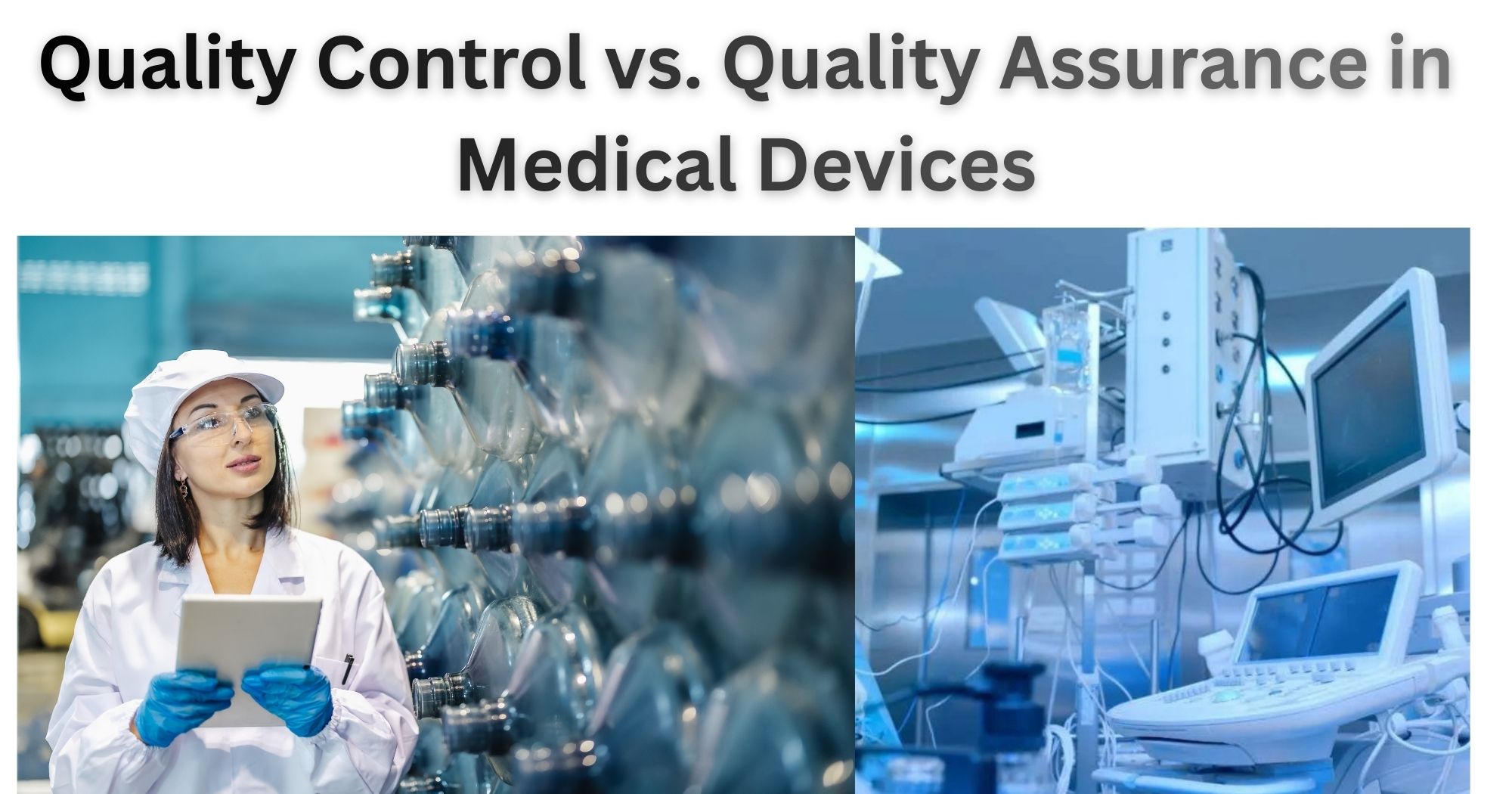
However, “quality” for medical devices is patient safety, regulatory compliance, and consistent performance across the product lifetime. Quality Management is a protocol to ensure product quality.
Overview of Quality Management
Effective quality management is a crucial aspect in the medical device industry, and it is ensured by a standard Quality Management System in place. Quality Management System (QMS) provides a framework that integrates Quality Assurance (QA), Quality Control (QC), risk management, and continual improvement to meet consumer expectations. A QMS in medical devices provides plans, policies, and procedures to ensure that the products are safe, consistent with regulatory requirements, and of high quality. QMS typically includes QA, QC, documentation, supplier management, process validation, Corrective and Preventive Actions (CAPA), internal audits, and management reviews. ISO 13485 is a globally recognized standard specifically for medical devices, and its certification is proof of high quality worldwide.
Defining Quality Assurance (QA)
ISO 9000 defines Quality Assurance as “part of quality management focused on providing confidence that quality requirements will be fulfilled.” It is a system-level part of quality management focused on designing and controlling processes to prevent defects as early as possible. In medical devices, QA operates throughout the product lifecycle, from design to production to distribution. QA also ensures compliance with industry standards and regulatory bodies like the FDA, ISO, EU MDR, etc.
Defining Quality Control (QC)
QC is that part of quality management that focuses on product testing and inspection throughout the manufacturing process to identify defects and correct them or reject non-conforming devices. According to ISO 9000, QC is “a part of quality management focused on fulfilling quality requirements”. It verifies that the products meet predefined specifications through sampling, testing, and inspection, and ensures no product is released without satisfactory test results.
Key differences between QA and QC
The major difference between QA and QC is in their focus; QA is primarily focused on designing processes, systems, and policies to ensure product quality, whereas QC is more product-focused, i.e., verification and inspection to ensure each product meets specifications. The main goal of QA is to build quality in-process and ensure compliance using methods like the PDCA cycle (Plan-Do-Check-Act), audits, process definition, quality planning, and training to ensure processes are capable and compliant. The main objective of QC is to verify conformity and block defective products and uses tools such as acceptance sampling, statistical process control, and experimental design to ensure no product is released without satisfactory test results.
The role of ISO 13485
ISO 13485 is an international standard for quality management systems in the design and manufacturing of medical devices that ensures products and related services consistently meet customer and regulatory requirements. It is fully aligned with EU MDR 2017/745 and emphasizes risk-based QMS processes. It is essential for manufacturers because it provides a framework for consistent design, development, production, and delivery of medical devices and ensures safety to customers. It helps the industries mitigate risks, meet regulatory requirements, improve operational efficiency, build consumer trust, and access global markets with standardized compliance. It requires design controls, process controls, validation, traceability, complaint handling, CAPA, and post-market surveillance. It integrates both QA and QC in a single system.
Regulatory Landscapes (FDA, MHRA, TGA, Health Canada)
ISO 13485 is a global standard; however, there are other regulatory bodies in different countries i.e U.S. Food and Drug Administration (FDA) in the U.S., the Medicines and Healthcare products Regulatory Agency (MHRA) in the UK, Therapeutic Goods Administration (TGA) in Australia, and Health Canada in Canada. All of these bodies use a risk-based framework to ensure medical devices are safe, effective, and of high quality. Each of these agencies maintains sovereign authority for approvals; however, they often collaborate through forums like the Access Consortium to align standards and share evaluations.
Good Manufacturing Practices (GMP)
Good manufacturing practices (GMP) are the aspect of QA that specifies how manufacturing must be organized to ensure quality and traceability. It is historically rooted in the US Medical Device Amendments and now reflected in QSR, EU MDR, and ISO 13485. It defines measures to ensure that processes for manufacturing are clearly defined, validated, documented, and people, environment, and materials for production are suitable.
GMP expectations include:
- Controlled, documented processes and environments
- Lot traceability
- Qualified personnel and validated equipment
- Integrated QA, QC, and risk management.
Process Validation vs. Product Testing
There is a distinct difference between process validation and product testing, the former being more QA- heavy and the latter being QC-heavy.
- Process Validation: It demonstrates that a manufacturing process consistently produces devices that meet predetermined specifications, minimizing variability and reducing the risk of defects.
- Product Testing: It includes in-process and final QC checks of samples or 100% units against various specifications using various tests.
Corrective and Preventive Actions (CAPA)
CAPA is a part of the QMS process used to identify, eliminate, and prevent recurrence of errors, problems, or non-conformances. It links QA, QC, and continual improvement. The primary inputs in CAPA are non-conformance reports, customer complaints, audit findings, test failures, and trend data, which require addressing as per the CAPA procedure in a QMS. Corrective action addresses the root cause of identified problems, which is called RCA, i.e., root cause analysis. Preventive action focuses on the anticipation and mitigation of potential problems before they occur.
The CAPA process includes: identification of problem evaluation RCA action plan verification closure
ISO 13485 and other regulatory bodies explicitly require documented CAPA procedures. An effective CAPA improves product safety, compliance, and cost efficiency.
Career Paths in Medical Device Quality
A career in medical device quality mostly revolves around working in QA/QC departments in both QA and QC roles in the industry.
- QA roles: QMS specialist, QA manager, internal auditor, design quality engineer. These focus specifically on processes, risk management, documentation, audits, and regulatory compliance.
- QC roles: QC technician, validation test engineer, inspection engineer. These focus more on inspection, testing, and measurement systems.
- Other roles:
- Regulatory affairs (RA) specialist: ensures regulatory compliance and submission to regulatory bodies.
- CAPA lead
- Compliance officer
Jobs in the medical device industry mostly require a technical knowledge of ISO 13485 and other such regulations and an education level of a bachelor’s degree in life sciences, engineering, or other fields. Senior or executive-level positions like QA manager, director, or RA managers might require a master’s degree.
Conclusion
In medical devices, QA and QC are complementary to each other. QA designs and maintains efficient and compliant processes, and QC verifies that individual products are safe and conforming. Together, they ensure safety and high quality of devices. ISO 13485 and other global regulations like FDA, MHRA, TGA, etc., formalize and standardize processes within risk based QMS to ensure global market access and a standard for safety and quality for medical devices. The medical device industry is tightly regulated and standardized to safeguard patients and reduce risks to health and well-being.
References
- Sharma, A., & Luthra, G. (2023). Implementing a Risk-Based Approach to Quality Management System ISO-13485 Processes in Compliance with EUMDR 2017/745 for Medical Device Industry. Journal of Pharmaceutical Research International, 35(13), 8–19. https://doi.org/10.9734/jpri/2023/v35i137365
- Rahman, P., & Mehnaz, S. (2024). International Journal for Multidisciplinary Research (IJFMR). SSRN Electronic Journal. https://doi.org/10.2139/ssrn.5054029
- Coronato, A. (2018). ISO 13485: Medical devices – quality management systems – requirements for regulatory purposes. 51–67. https://doi.org/10.1049/PBHE012E_ch5
- Gouri Mahesh Sontakke, Shrutika Shriprasad Sakhare, Rasika Dhanaji Chavan, Vedant Gopichand Hamand, & Vedant Gopichand Hamand. (2023). Quality Control and Quality Assurance in Pharmaceutical Industry. International Journal of Advanced Research in Science, Communication and Technology, 501–510. https://doi.org/10.48175/IJARSCT-8873
