Differences between chemisorption and physisorption

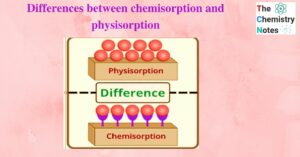
Differences between chemisorption and physisorption

Physical adsorption, also known as physisorption, is a reversible phenomenon involving weak Van der Waals forces between adsorbate and adsorbent, whereas chemisorption is an irreversible phenomenon involving strong chemical interaction between adsorbate and adsorbent. S.N Physisorption Chemisorption 1. It is … Read more

Electrochemical series and its applications

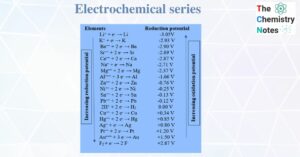
Electrochemical series

The series of elements or ions in the increasing order of reduction potential or decreasing order of oxidation potential is known as the electrochemical series. From the electrochemical series, we can predict the feasibility of the reaction, the emf of … Read more

Radioactivity and radioactive series

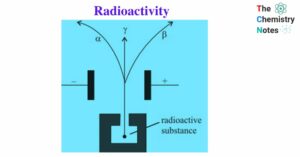
Radioactivity

Radioactivity is the phenomenon of spontaneous disintegration of certain nuclei into other elements with the emission of invisible active radiations.  It is a natural phenomenon in which unstable atoms emit radiation to achieve stability. Discovery In 1896 Henri Becquerel discovered … Read more

Crystals and laws of crystallography

Types of unit cell

In any compound, intermolecular forces of attraction and thermal force operate in opposite directions. The intermolecular force of attraction tends to keep the particles together while the thermal force tends to keep the particles apart. The extent of these forces … Read more