Skip to content
Science Info
  • Home
  • Astronomy
  • Physics
  • Chemistry
    • Periodic Table
    • Analytical Chemistry
    • Basic Chemistry
    • Biochemistry
    • Computational Chemistry
    • Environmental Chemistry
    • Inorganic Chemistry
    • Nanochemistry
    • Organic Chemistry
    • Pharmaceutical Chemistry
    • Physical Chemistry
  • Biology
    • Plants
    • Animals
  • Science Facts
  • Top 10 in Science

Kabita Sharma

Kabita Sharma is a Ph.D. student in the Department of Chemistry at the University of North Texas, USA. Her research focuses on understanding protein degradation mediated by PROTAC (Proteolysis-Targeting Chimera) molecules and on exploring their potential for targeted protein degradation to treat diseases such as cancer. Through this work, she aims to advance drug discovery by targeting previously inaccessible or undruggable sites where PROTAC molecules can operate effectively. Additionally, she is analyzing how the buried surface area of proteins affects their binding and unbinding affinities. Using computational tools, she explores the challenges of removing one infected protein from another during treatment. Driven by a passion for solving complex scientific challenges, Kabita uses her knowledge in chemistry, chemical biology, and computational tools to advance her research. Beyond her academic pursuits, she aspires to inspire others toward science and its wonders through writing and sharing her knowledge.

Glycine- Definition, Preparation, Properties, Uses
August 10, 2022July 23, 2022 by Kabita Sharma
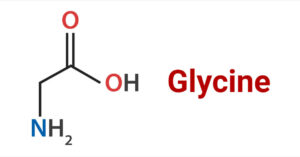
Glycine

Glycine is a sweet-tasting amino acid obtained from the hydrolysis of protein. It is a nonessential amino acid present in mammals. Mammals can synthesize glycine from the amino acids serine and threonine, and it is also present in certain animal … Read more
Mass Spectroscopy (MS)- Definition, Principle, Parts, Uses

August 19, 2022July 15, 2022 by Kabita Sharma
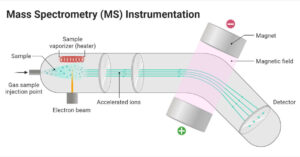
Instrumentation of Mass Spectrometry (MS)

Mass spectroscopy is the accurate method for determining of molecular mass of the compound and its elemental composition. Principle of Mass Spectroscopy When molecules are bombarded with an energetic electron beam, 1e- is removed from the molecule. The removal of … Read more

UV Spectroscopy- Definition, Principle, Parts, Uses

August 19, 2022July 14, 2022 by Kabita Sharma
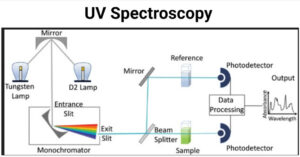
Instrumentation of UV Spectroscopy

UV spectroscopy involves the promotion of electrons (n, σ, π) from the ground state to a higher energy state. In U.V. spectroscopy, the excitation of the electron occurs in the range of 200-800 nm. Principle of UV Spectroscopy When the … Read more

Aldehydes and Ketones (A Level Chemistry Revision Notes)

July 13, 2026May 25, 2022 by Kabita Sharma
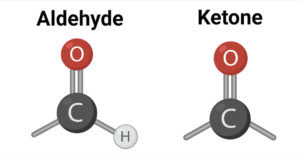
Aldehyde and Ketone

Aldehyde and ketones are commonly known as carbonyl compounds. Both aldehyde and ketone consist of a carbon-oxygen double bond as a functional group. Which is known as the carbonyl group. The carbonyl group in an aldehyde is bonded to one … Read more

Newer posts
← Previous Page1 … Page43 Page44

Topics

  • Analytical Chemistry (164)
  • Animals (2)
  • Astronomy (4)
  • Basic Chemistry (144)
  • Biochemistry (38)
  • Book Reviews (1)
  • Botany (2)
  • Computational Chemistry (4)
  • Differences Between (70)
  • Environmental Chemistry (31)
  • Events (2)
  • Inorganic Chemistry (183)
  • Journals (1)
  • Nanochemistry (17)
  • Organic Chemistry (177)
  • Periodic Table (130)
  • Pharmaceutical Chemistry (15)
  • Physical Chemistry (199)
  • Physics (115)
  • Plants (13)
  • Science Facts (12)
  • Syllabus (5)
  • Top 10 in Science (14)
  • Universities (4)
  • Zoology (1)
  • Redox Reactions (A Level Chemistry Revision Notes)
  • Oxidation Numbers (A Level Chemistry Revision Notes)
  • Electrochemistry (A Level Chemistry Revision Notes)
  • Hess’s Law (A Level Chemistry Revision Notes)
  • The Gaseous State: Ideal and Real gases (A Level Chemistry Revision Notes)
  • About
  • Our Team
  • Contact Us
  • Editorial Policy
  • Privacy Policy
  • Cookie Policy
  • Disclaimer (Terms and Conditions)
© 2026 Science Info. Made with ♡ by Sagar Aryal.