Plasmids: Definition, Types, Properties, Functions, Applications

Plasmids

J. Lederberg invented the term plasmids. Plasmids are independent self-replicating DNA molecules that exist as separate, extrachromosomal genetic components in bacteria. They are also found in some eukaryotes, such as yeast. Plasmids are replicons. Replicons are self-replicating nucleic acid molecules. Natural plasmids have … Read more

Colligative Properties: 4 Important Types, Examples

Colligative Properties

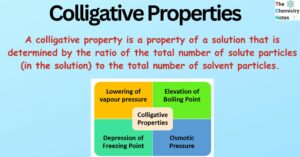
A colligative property is an important concept in chemistry. The term “colligative” was derived from the Latin word “colligatus,” which means “bound together.” Colligative properties explain how the properties of a solution are related to the concentration of a solute in the … Read more