Wolff-Kishner Reduction: Definition, Mechanism, Synthetic Applications, Limitations

Wolff-Kishner reduction

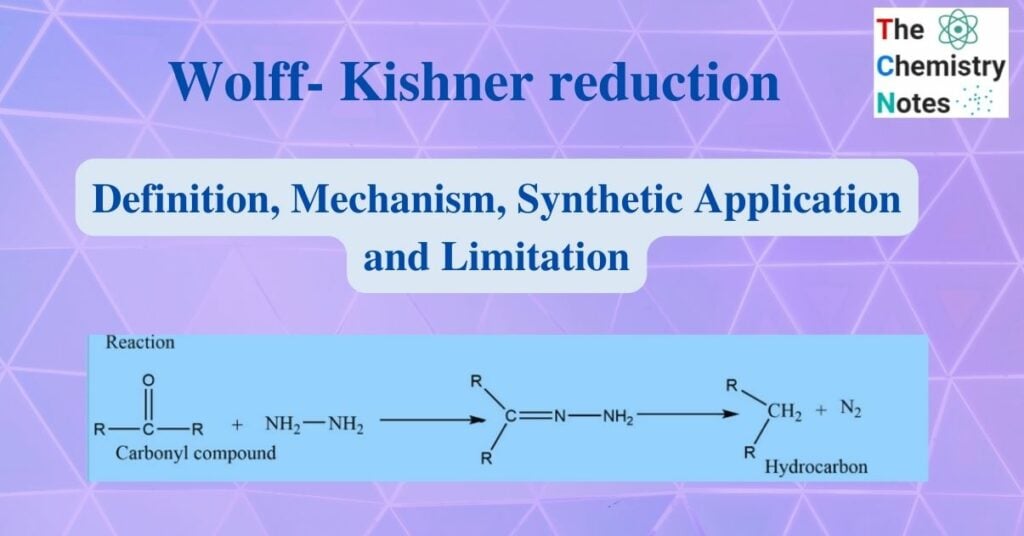
Wolff-Kishner reduction was discovered by Nicolai Kishner in 1911 and Ludwig Wolf in 1912. It involves heating carbonyl compounds with hydrazine and base to convert them to hydrocarbons. In this reaction, aldehyde and ketone react with hydrazine to produce hydrocarbon in presence of base.

image 29
Wolff Kishner reduction

Mechanism of Wolff Kishner reduction

Step 1: The electrophilic addition of hydrazine to C=O to produce hydrazone.
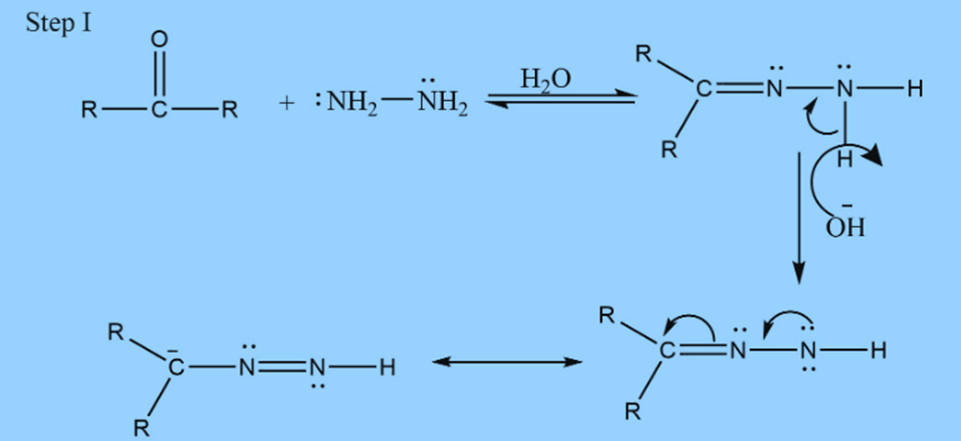
Wolff-Kishner reduction

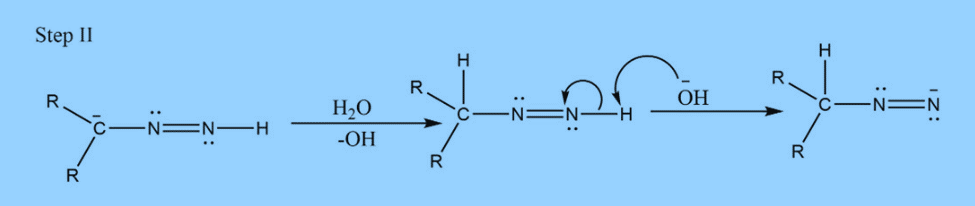
Step II: Addition of base

Wolff-Kishner reduction
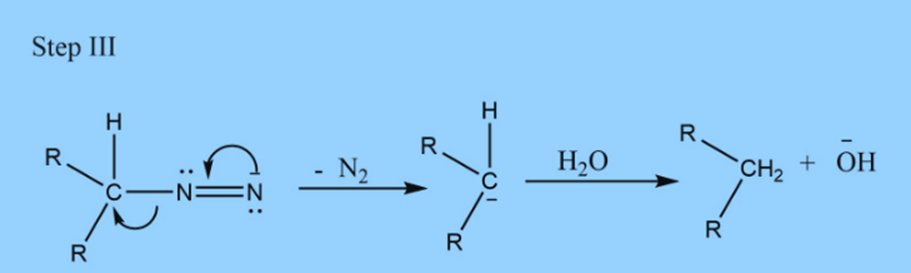
Step III: Removal of nitrogen
Wolff-Kishner reduction

Applications of Wolff Kishner reduction

Wolff Kishner reduction is used for,

  1. Production of hydrocarbon from carbonyl compounds
  2. Synthesis of long-chain alkyl chain to the benzene ring
  3. Polycyclic aromatics and aromatics with side hydrocarbon chains

Some examples of sythetic applications

I. Synthesis of camohor from camphane
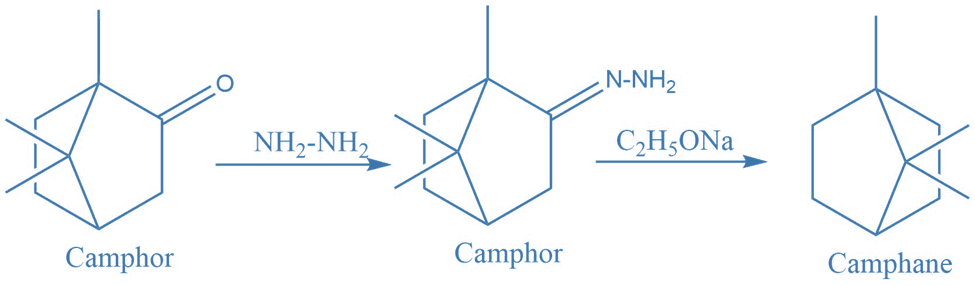
Synthesis of camohor from camphane

II. Synthesis of pyrrole
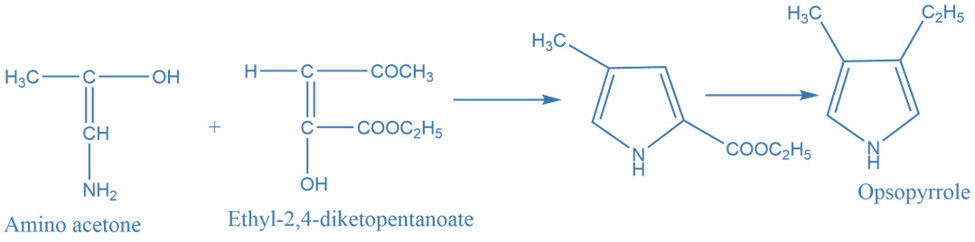
Synthesis of pyrrole

Limitations

  1. Wolff-Kishner reduction reaction needs high temperature.
    • Sometimes double bond migration occurs instead of the expected mechanism of the reaction to give undesirable products like alpha, and beta-unsaturated carbonyl compounds.

References

  1. Morrison, R. T., & Boyd, R. N., Organic chemistry, Allyn and Bacon, Inc. 1987.
  2. March, J., Advanced Organic Chemistry, Wiley Eastern Limited, 1986.
  3. Skyes, P., A Guide Book to Mechanism in Organic Chemistry, Second edition, Orient Longman Ltd., 1988

About Author

Photo of author

Kabita Sharma

Kabita Sharma is a Ph.D. student in the Department of Chemistry at the University of North Texas, USA. Her research focuses on understanding protein degradation mediated by PROTAC (Proteolysis-Targeting Chimera) molecules and on exploring their potential for targeted protein degradation to treat diseases such as cancer. Through this work, she aims to advance drug discovery by targeting previously inaccessible or undruggable sites where PROTAC molecules can operate effectively. Additionally, she is analyzing how the buried surface area of proteins affects their binding and unbinding affinities. Using computational tools, she explores the challenges of removing one infected protein from another during treatment. Driven by a passion for solving complex scientific challenges, Kabita uses her knowledge in chemistry, chemical biology, and computational tools to advance her research. Beyond her academic pursuits, she aspires to inspire others toward science and its wonders through writing and sharing her knowledge.

Leave a Comment