10 Important Types of Chemical Reactions

Types of Chemical Reactions

When a chemical change occurs, a chemical reaction is said to have taken place. In other words, a chemical reaction causes a chemical change in the reactants. Thus, we can say that both chemical change and chemical reaction imply the … Read more

Titration: Definition, 4 Types, Procedure

Titration

Titration is a typical quantitative/chemical analysis method used in laboratories to determine the unknown concentration of a known reactant (analyte). The method is based on a chemical reaction between a standard solution (titrant) and an analyte solution.Titration is one of … Read more

Mixture: 2 Important Types, Properties

Mixture Definition, Types, Properties

A mixture is made up of one or more pure components with different ratios. Mixtures can be either heterogeneous or homogeneous. When compared to homogeneous mixtures, heterogeneous mixtures can be visually divided into individual components. The most prevalent kind of … Read more

5 Important Periodic Trends

Periodic Trends

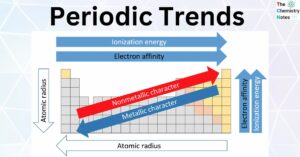
Periodic trends are specific patterns found in the periodic table that depict several features of a particular element. Significant periodic patterns include electronegativity, ionization energy, electron affinity, atomic radius, melting temperature, and metallic nature. Periodic trends, which arise from the … Read more

Electron Configuration/ Electronic Configuration

Electron Configuration

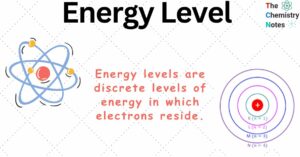
The arrangement of an atom’s or molecule’s (or other physical structure’s) electrons in their atomic or molecular orbitals is known as the electron configuration. Electron configuration is also known as electronic structure or electronic configuration. What is Electron Configuration? An element’s electron … Read more

Osmosis- Importance in Chemistry, Biology

Osmosis

Osmosis is the movement of water molecules through a semi-permeable membrane from a high-concentration area to a low-concentration area. Osmosis happens across the cellular membrane to protect a cell from becoming flaccid (not enough water) or turgid (too much water). What … Read more