Electron Orbitals

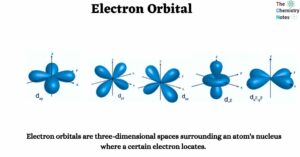
Electron Orbital

Electron orbitals are areas within the atom where electrons are most likely to be located. Electrons are not merely floating around within the atom; rather, they are confined within electron orbitals. What is an Electron Orbital? Electron orbitals are three-dimensional spaces surrounding … Read more
Constitutional Isomers: 5 Important Types and Examples

Constitutional Isomers

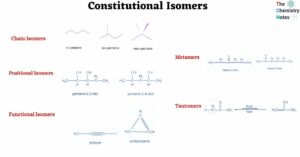
Isomers are molecules having the same chemical formula but distinct structural configurations. Constitutional isomers and stereoisomers are two types of isomers. The structural isomers or constitutional isomers differ in the way their atoms are connected, and this phenomenon is known … Read more

Walden Inversion Reaction: Mechanism, Example

Walden Inversion Reaction

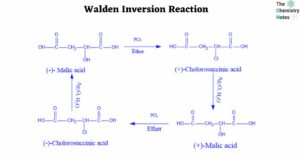
A bimolecular nucleophilic substitution (SN2) reaction results in a change in the configuration of a chiral center known as a “Walden inversion reaction.” This inversion, also known as optical inversion, may or may not result in a change in the … Read more

Heat of Vaporization of Water

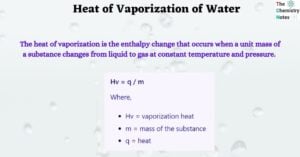
Heat of Vaporization of Water

Water has an extraordinarily high boiling point temperature, close to 100°C. The heat of vaporization is the term for the amount of energy needed to convert one gram of liquid water into water vapor due to the network of hydrogen … Read more