Skip to content
Science Info
  • Home
  • Astronomy
  • Physics
  • Chemistry
    • Periodic Table
    • Analytical Chemistry
    • Basic Chemistry
    • Biochemistry
    • Computational Chemistry
    • Environmental Chemistry
    • Inorganic Chemistry
    • Nanochemistry
    • Organic Chemistry
    • Pharmaceutical Chemistry
    • Physical Chemistry
  • Biology
    • Plants
    • Animals
  • Science Facts
  • Top 10 in Science

Jyoti Bashyal

Jyoti Bashyal is a Ph.D. student in the Department of Chemistry and Chemical Biology at the University of New Mexico, USA. Her research focuses on understanding the structure-function relationships in glucose transporters (GLUTs) and their implications for diseases such as cancer, diabetes, and metabolic syndromes. By investigating how these proteins work at the molecular level, Jyoti aims to contribute to drug discovery efforts targeting these critical transporters. She is particularly interested in exploring how high-throughput protein expression and crystallization techniques can be applied to better understand carbohydrate-related proteins and their therapeutic potential. Blending her expertise in chemistry, biology, and computational tools, Jyoti is driven by a passion for solving complex scientific challenges. Outside the lab, she is a dedicated science communicator who loves making complex concepts approachable and engaging. Through writing and sharing her knowledge, she hopes to inspire curiosity and excitement about science. Jyoti’s goal is to connect groundbreaking discoveries with real-world impact, encouraging others to see the power and beauty of science in action.

Crystallization: 4 Types, Processes, Steps, Important Applications

May 10, 2023 by Jyoti Bashyal
Crystallization Types, Steps, Applications

The process of solidifying atoms or molecules into a highly organized form known as a crystal is known as crystallization. A supersaturated solution nucleates the solute in the process of crystallization, which is a technique for turning a solution into … Read more
Molybdenum (Mo) Element: Important Properties, Uses

May 10, 2023 by Jyoti Bashyal
Molybdenum (Mo) Element

Molybdenum is a metallic element with the atomic number 42 and is represented by the symbol ‘Mo’ in the periodic table. It is classified as a transition metal and belongs to the d-block of group 6 of the periodic table. … Read more

Rhodium (Rh) Element: Rare Expensive Metal Properties, Uses

May 13, 2023May 9, 2023 by Jyoti Bashyal
Rhodium (Rh) Element

Rhodium is a metallic element with the atomic number 45 and is represented by the symbol ‘Rh’ in the periodic table. It is classified as a transition metal and belongs to the d-block of group 9 of the periodic table. It is … Read more

Zirconium (Zr) Element: Important Properties, Uses

May 9, 2023 by Jyoti Bashyal
Zirconium (Zr) Element

Zirconium is a metallic element with the atomic number 40 and is represented by the symbol ‘Zr’ in the periodic table. It is classified as a transition metal and belongs to the d-block of group 4 of the periodic table. With almost … Read more

Yttrium (Y) Element: Properties, Amazing Uses, Health Effects

May 8, 2023 by Jyoti Bashyal
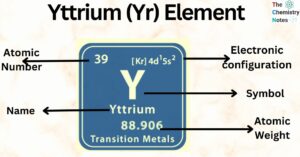
Yttrium (Yr) Element

Yttrium is a metallic element with the atomic number 39 and is represented by the symbol ‘Y’ in the periodic table. It is classified as a transition metal and belongs to the d-block of group 3 of the periodic table. It is … Read more

Rubidium (Rb) Element: Important Properties, Uses, Effects

May 10, 2023May 7, 2023 by Jyoti Bashyal
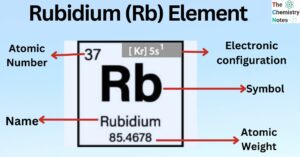
Rubidium (Rb) Element

Rubidium is a metallic element with the atomic number 37 and is represented by the symbol ‘Rb’ in the periodic table. It belongs to the s-block of a group of the periodic table. It is the first alkali metal in the group … Read more

Strontium (Sr) Element: Important Properties, Uses, Reactions

May 7, 2023 by Jyoti Bashyal
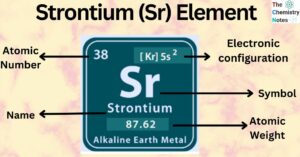
Strontium (Sr) Element

Strontium is a chemical element with the atomic number 38 and is represented by the symbol ‘Sr’ in the periodic table. It belongs to the s-block of a group 2 of the periodic table along with Beryllium, Magnesium, Calcium, and Barium … Read more

Krypton (Kr) Element: Properties, Interesting Uses, Facts

May 7, 2023 by Jyoti Bashyal
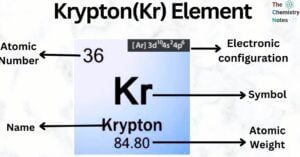
Krypton(Kr) Element

Krypton is a chemical element with the atomic number 36 and is represented by the symbol ‘Kr’ in the periodic table. It belongs to the p-block of group 18 of the periodic table. It is a rare gas that is … Read more

Bromine (Br) Element: Properties and Amazing Uses, Facts

May 7, 2023 by Jyoti Bashyal
Bromine(Br) Element

Bromine is a metallic element with the atomic number 35 and is represented by the symbol ‘Br’ in the periodic table. It is classified as a halogen and belongs to the p-block of group 17 of the periodic table. Bromine is in … Read more

Older posts
Newer posts
← Previous Page1 … Page42 Page43 Page44 … Page66 Next →

Topics

  • Analytical Chemistry (164)
  • Animals (2)
  • Astronomy (4)
  • Basic Chemistry (144)
  • Biochemistry (38)
  • Book Reviews (1)
  • Botany (2)
  • Computational Chemistry (4)
  • Differences Between (70)
  • Environmental Chemistry (31)
  • Events (2)
  • Inorganic Chemistry (183)
  • Journals (1)
  • Nanochemistry (17)
  • Organic Chemistry (177)
  • Periodic Table (130)
  • Pharmaceutical Chemistry (15)
  • Physical Chemistry (199)
  • Physics (115)
  • Plants (13)
  • Science Facts (12)
  • Syllabus (5)
  • Top 10 in Science (14)
  • Universities (4)
  • Zoology (1)
  • Redox Reactions (A Level Chemistry Revision Notes)
  • Oxidation Numbers (A Level Chemistry Revision Notes)
  • Electrochemistry (A Level Chemistry Revision Notes)
  • Hess’s Law (A Level Chemistry Revision Notes)
  • The Gaseous State: Ideal and Real gases (A Level Chemistry Revision Notes)
  • About
  • Our Team
  • Contact Us
  • Editorial Policy
  • Privacy Policy
  • Cookie Policy
  • Disclaimer (Terms and Conditions)
© 2026 Science Info. Made with ♡ by Sagar Aryal.