Salt: Preparation, Properties, Types, Uses
Salt

Salt is defined in chemistry as an inorganic or organic molecule with ionic bonding. When dissolved in water, ions break down into positively charged cations and negatively charged anions. Positive ions (cations) and negative ions (anions) make up salts. Because a … Read more
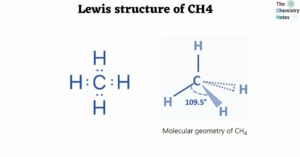
Lewis Structure of CH4

Lewis structure of CH4

The Lewis structure of a molecule depicts the arrangement of atoms and valence electrons. The Lewis structure of CH4 is a basic but important as itĀ helps us understand the form and chemical activity of the molecule by highlighting the electron … Read more

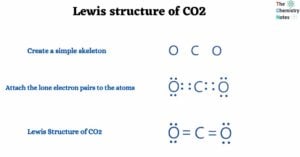
Lewis structure of CO2

Lewis structure of CO2

Lewis structures are important because they make it easy to see how atoms are arranged in molecules and provide insight into how molecules interact. They are helpful in the prediction of a molecule’s polarity, structure, and reactivity as well as … Read more

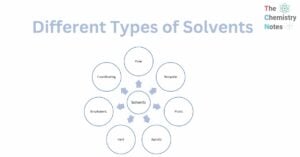
Different Types of Solvents

Types of solvents

A solvent is a substance that can combine with other materials to form solutions. Solvents are frequently liquids, although they can also be solids or gases. A solution is a solute-solvent mixture. The amount of substance dissolved in a solvent in a smaller … Read more

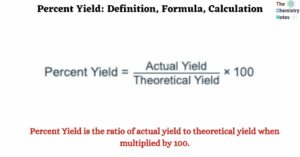
Percent Yield: Definition, Formula, Calculation

Percent Yield Definition, Formula, Calculation

The percentage that represents the difference between the theoretical and actual yields is called the percent yield. In chemistry, yield is the amount of product produced by a reaction relative to the amount of reactant consumed; it is typically given … Read more

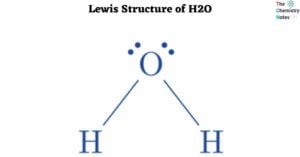
Lewis Structure of H2O

Lewis Structure of H2O

The Lewis structure represents the valence electrons of an atom or molecule. The Lewis Structure of H2O molecule reveals that two hydrogen atoms are linked to one oxygen atom. A single covalent link is formed when each hydrogen atom and … Read more