Galvanization of Metal

Galvanization of Metal
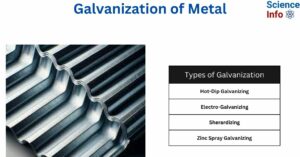
A material that has undergone the galvanization process—a corrosion prevention method for iron or steel in which zinc is applied to the base to stop it from rusting—is referred to as galvanized metal. Typically, it’s done to enhance the durability … Read more

Dye-ligand Chromatography: Principle, Protocol, Uses

Dye-ligand chromatography

Dye-ligand chromatography is a purification method that provides high-purity factors and unique selectivity. Dye ligands can function as substrate analogs, forming affinity interactions with their corresponding enzymes. The process of separating chemicals from a mixture is called chromatography. Extracting particular proteins from … Read more

Ductility: Factors, Importance, Calculation

Ductility Factors, Importance, Calculation

A property of a metal to withstand being pulled or stretched before fracturing is known as ductility. It is among the most important mechanical characteristics of a metal. Businesses would not be able to ensure the soundness of their appliances … Read more

Mond’s Process: Principle, Application

Mond's process

Mond’s process is used to extract and purify nickel. In this process, nickel oxide is converted into pure nickel. This procedure takes advantage of nickel’s easy and reversible complexation with carbon monoxide that results in nickel tetracarbonyl. In 1890, Ludwig Mond invented … Read more

ABS Plastic (Acrylonitrile butadiene styrene)

Acrylonitrile butadiene styrene (ABS) Plastic

Acrylonitrile butadiene styrene (ABS) is an impact-resistant engineering thermoplastic composed of acrylonitrile, butadiene, and styrene polymers. ABS is a popular thermoplastic polymer used in injection molding. The polymerization of acrylonitrile and polystyrene monomers with butadiene rubber yields acrylonitrile butadiene styrene (ABS). … Read more

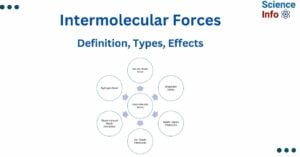
Intermolecular forces: Definition, Types, Effects

Intermolecular forces

Intermolecular forces refer to the attraction between atoms, molecules, and ions nearby. This differs from intramolecular forces, which refer to covalent bonding within molecules.When two particles have an intermolecular interaction, the positive (+) charge on one attracts the negative (-) … Read more