Bottom-Up Approach: Nanomaterial Synthesis

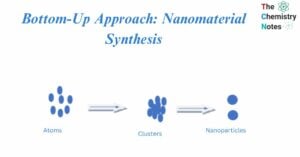
Bottom-up approach

The Bottom-up approach utilizes and combines sub- or nanoscale items (atoms or molecules) to create nanostructures with new or different functions. This strategy, which enables more controlled system design, can be seen as the logical progression of supramolecular chemistry, which … Read more

Bond Angles: Molecular Shapes, Factors, Examples

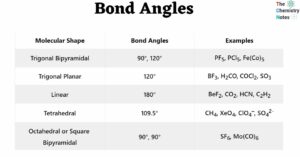
Bond Angles

Different molecules or compounds are formed based on the fundamental structural properties. The bond angles is one such measure. It is an important characteristic because if the angle between the bonded electrons or atoms is improper, the atom becomes unstable … Read more

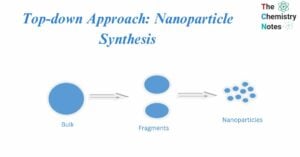
Top-down Approach: Nanomaterial Synthesis

Top-down Approach

The top-down approach begins with macroscopic structures. The processes begin with bigger particles that are converted to nanoparticles through a series of activities. The main disadvantages of these systems are that they require huge installations and a large amount of … Read more

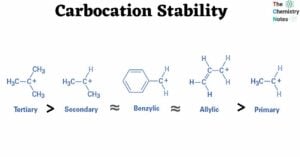
Carbocation Stability: Definition, Factors, Order

Carbocation Stability

A carbocation is a positively charged carbon atom that is cation. Carbocations are intermediates in many organic processes. They are typically unstable and short-lived, but can be sustained by resonance or nearby functional groups that can contribute electron density. Continue … Read more