12 Principles of Green Chemistry

12 Principles of Green Chemistry

In the year 1998, Paul Anastas and John C. Warner presented a set of guidelines for green chemistry. The twelve principles of green chemistry have offered a range of options for minimizing the negative effects that chemical manufacturing has on … Read more

Nanochemistry- Definition and Applications

Nanochemistry- Definition and Applications

Nanochemistry is a novel approach to building devices with molecular scale precision, atom by atom. It entails researching the synthesis and characterization of nanoscale materials, with a focus on how atoms behave and interact, as well as how they can … Read more

Applications of Green Chemistry

Applications of Green Chemistry

Green chemistry is the practice of chemical science and manufacturing in a way that is sustainable, safe, and non-polluting, consuming the least amount of materials and energy while producing little or no waste. Applications of Green Chemistry include the applicability … Read more

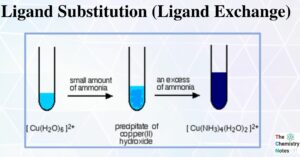
Ligand Substitution (Ligand Exchange)

Ligand Substitution (Ligand Exchange)

A complex’s ligands can be exchanged entirely or partially for other ligands. This kind of reaction is a substitution reaction. It happens if the new complex formed is greater stable than the original complex. Ligand substitution is typically the first reaction … Read more

Thermodynamics -Multiple Choice Questions(MCQ)

Thermodynamics Multiple Choice Questions (MCQ)

a) Conservation of energyb) Conservation of mass c) Conservation of momentum d) Conservation of work Answer: a The conservation of energy is the foundation of the first law of thermodynamics, as explained. It deals with the labor performed and the … Read more