Hybridization: Definition, Features, Types

Hybridization

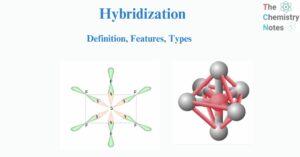
Hybridization is the process of combining two or more non-equivalent atomic orbitals with similar energies but different forms. The process of combining two atomic orbitals to form a new type of hybridized orbitals is termed hybridization. Atomic orbitals of the same … Read more

Nitric Acid (HNO3): Properties, Reactions, Applications

Nitric Acid (HNO3)

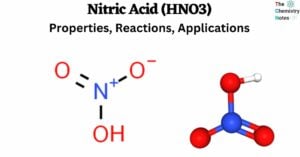
The alchemist first created nitric acid (HNO3) by combining saltpeter (KNO3) and concentrated sulfuric acid (H2SO4). The process involved the method to separate gold and silver, wherein silver demonstrated solubility while gold exhibited insolubility. The acid was referred to as … Read more

Allotropes of Phosphorus: Properties, Structure, Synthesis

Allotropes of Phosphorus

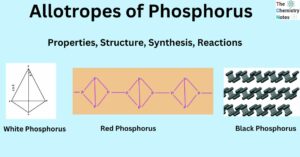
Phosphorus is highly reactive and therefore does not exist in its elemental form in nature. Phosphates tend to occur in an amalgamated state. The significant phosphate minerals include: Phosphate rock or phosphorite: Ca3(PO4)2Fluorapatite: 3Ca3(PO4)2.CaF2Chlorapatite: 3Ca3(PO4)2.CaCl2Vivianite: Fe3(PO4)2.8H2O In addition to the … Read more

Refining of Metals: 7 Important Methods

Refining of Metals

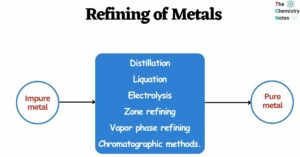
The metals acquired through any method discussed in Metallurgy, typically those with lower electropositivity, require additional purification also called refining of metals due to the potential presence of other metals, dissolved oxides, carbon, phosphorous, and similar impurities. The process refining … Read more