Plasmids: Definition, Types, Properties, Functions, Applications

Plasmids

J. Lederberg invented the term plasmids. Plasmids are independent self-replicating DNA molecules that exist as separate, extrachromosomal genetic components in bacteria. They are also found in some eukaryotes, such as yeast. Plasmids are replicons. Replicons are self-replicating nucleic acid molecules. Natural plasmids have … Read more

Racemic modification: Definition, Preparation, Examples

Racemic modification

Racemic modification is the mixture of two enantiomers, substances with mirror-image or dissymmetric chemical structures in equal amounts. Racemic modification refers to the equimolar mixture of two enantiomers. It is also known as recemic mixture or racemate. Each enantiomer rotates the plane of … Read more

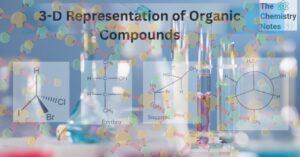
Four Different Projections of Organic Compounds

Projections of organic compounds

The three-dimensional structures of organic compounds can be represented by different projections. Common Projections of organic compounds include Fischer projection, Sawhorse projection, and Newman projection. Flying Wedge or Wedge Dash projections of organic compounds The Flying-Wedge Projection is the most … Read more