Toughness: Factors affecting, Types,

Toughness

Toughness is a quality that allows a material to sustain impact loading without fracture. The harder material can withstand greater strain without breakage. Toughness measures a material’s resistance to fracture while under stress. The energy required to break a substance is … Read more


Applications of Chelation Therapy

Applications of Chelation Therapy

Chelation therapy is a medical practice that involves the introduction of a chelating substance to eliminate heavy metals from the body. In chelation therapy, a variety of chelating compounds are employed as medications to treat heavy metal intoxication. The word … Read more

Brittleness: Factors Affecting, Types

Brittleness

Brittleness refers to a material’s tendency to fracture or shatter when subjected to stress or impact. A brittle substance has no elasticity and shows little deformation before shattering. Glass and ceramics are common examples of brittle materials. Brittle behavior occurs when … Read more

What is Micron? How Small is Micron?

What is Micron

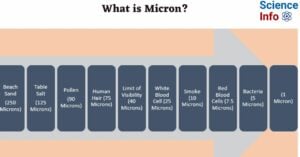
Have you ever needed to measure anything so tiny that using millimeters or centimeters wouldn’t make sense? Microns come into play here. In the sciences and industry, a micron, often known as a micrometer/micrometer or µm, is a measuring unit. The … Read more

Room Temperature

Room temperature

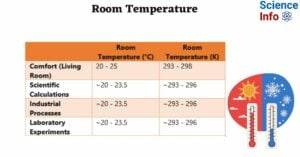
The word “room temperature” refers to a temperature range appropriate for human habitation.A person dressed normally feels neither hot nor cold within this temperature range. To the average individual, room temperature is the reading on the thermometer in the room. The … Read more

Nuclear Symbol Notation/ Isotope Notation

Nuclear Symbol Notation

The nuclear symbol notation is a sort of shorthand expression that identifies the element’s symbol or atomic number as well as its mass number. Symbols are used to represent nuclei in the same way as chemical formulas and equations are. … Read more

Intermolecular forces: Definition, Types, Effects

Intermolecular forces

Intermolecular forces refer to the attraction between atoms, molecules, and ions nearby. This differs from intramolecular forces, which refer to covalent bonding within molecules.When two particles have an intermolecular interaction, the positive (+) charge on one attracts the negative (-) … Read more

Colors of the Rainbow

Colors of the Rainbow

Sir Isaac Newton initially identified seven colors of the rainbow: red, orange, yellow, green, blue, indigo, and violet. However, in contemporary conventions, the commonly acknowledged list tends to simplify, leaving out indigo and recognizing six colors: red, orange, yellow, green, … Read more