Nanotoxicology: Definition, Factors, Mechanism

Nanotoxicology

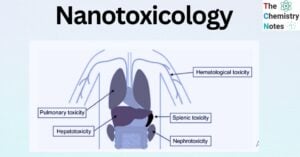
Nanotoxicology is concerned with determining the negative consequences of nanoparticles on human health and the environment. Nanotoxicology seeks to define and identify the hazards of manufactured nanomaterials and necessitates a multidisciplinary team approach that includes toxicology, biology, chemistry, physics, material … Read more

Impacts of Nanotechnology: Concerns and Challenges

Impacts of Nanotechnology

In comparison to bulk materials, nanomaterials are characterized by significantly distinct defect dynamics, and as a result, they exhibit distinctive structural and functional features. Because nanoparticles have a high surface area to volume ratio, they have a higher level of … Read more

10 Important Nanomaterial Properties

Nanomaterials Properties

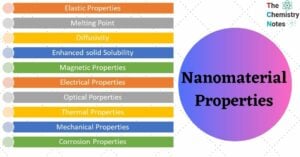
Nanoscience and nanotechnology rely heavily on nanomaterials. The study of nanostructures and the use of related technologies is a rapidly expanding field of study that spans several academic disciplines. It might drastically alter the production of materials and goods as … Read more

15 Amazing Nanochemistry Applications

15 Amazing Applications of Nanochemistry

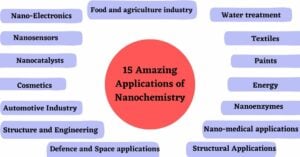
Throughout history, there have been numerous instances of innovations that completely transformed human civilization. From the development of the printing press to the wheels for cars, technical advancements have significantly improved the standard of living and, in turn, changed society. … Read more

Nanochemistry- Definition and Applications

Nanochemistry- Definition and Applications

Nanochemistry is a novel approach to building devices with molecular scale precision, atom by atom. It entails researching the synthesis and characterization of nanoscale materials, with a focus on how atoms behave and interact, as well as how they can … Read more

Carbon Nanotube- Definition, Properties, and Applications

Carbon Nanotube

Carbon nanotubes (CNT) are the fundamental building blocks of nanotechnology. Nanotechnology heavily relies on carbon, which has an atomic number of six. While researching the graphite electrode surface used in electric arc discharge, Iijima unintentionally discovered them. This unintentional discovery … Read more