Skip to content
Science Info
  • Home
  • Astronomy
  • Physics
  • Chemistry
    • Periodic Table
    • Analytical Chemistry
    • Basic Chemistry
    • Biochemistry
    • Computational Chemistry
    • Environmental Chemistry
    • Inorganic Chemistry
    • Nanochemistry
    • Organic Chemistry
    • Pharmaceutical Chemistry
    • Physical Chemistry
  • Biology
    • Plants
    • Animals
  • Science Facts
  • Top 10 in Science

Physics

Physics is the fundamental science that explores the structure of matter and the interactions between its basic constituents across the observable universe.

It delves into both macroscopic and submicroscopic realms, aiming to understand the behavior of objects under various forces and the origins of fundamental force fields such as gravity, electromagnetism, and nuclear forces. At its core, physics seeks to formulate comprehensive principles that unify disparate phenomena.

The subject of physics encompasses numerous branches, each focusing on specific aspects of nature. These branches have evolved to encompass a vast array of phenomena, providing insights into the workings of the physical world.

Among the traditional branches are classical physics, which includes mechanics, optics, acoustics, and electromagnetism.

  • Mechanics, a cornerstone of classical physics, investigates the motion of objects with or without the application of force. It comprises classical mechanics, which deals with the laws governing motion and forces, and quantum mechanics, which delves into the behavior of subatomic particles.
  • Optics, another branch, examines the behavior, propagation, and properties of light across the electromagnetic spectrum, including infrared, visible, and ultraviolet light.
  • Thermodynamics explores the relationships between heat, work, and energy, as well as the mechanisms of heat transfer through convection, conduction, and radiation.
  • Electromagnetism investigates the fundamental forces of electric and magnetic fields, encompassing phenomena such as electricity, magnetism, and light.
  • Relativity, as formulated by Albert Einstein, fundamentally redefines our understanding of space and time, proposing that they are relative and dependent on the observer’s frame of reference.
  • Acoustics focuses on the study of sound waves and their transmission, production, and effects in various mediums, including gases, liquids, and solids.

Each branch of physics contributes to our understanding of the universe, addressing questions ranging from the origins of the cosmos to the behavior of subatomic particles.

Through continuous exploration and experimentation, physicists strive to open the mysteries of nature and uncover the underlying principles governing the physical world.

Perfect Machine (Ideal Machine): Principle, Characteristics, and Real Life Circumstances Explained

May 17, 2026 by Rabina Kadariya
Perfect machines (Ideal machines)

Introduction and Definition of Perfect Machine (Ideal Machine) in Physics A perfect machine is the kind of machine that has no energy loss while performing a task and are 100% efficient. The contemporary world and modern discoveries are impossible without … Read more

Compound Machine: Principle, Components, Examples, Applications

April 13, 2026 by Rabina Kadariya
Compound Machine

Introduction to Compound Machines in Physics A compound machine is named so because it is made up of two or more simple machines. The simple machines are designed to perform any work easily, faster, and more conveniently. Thus, compound machines … Read more

Screw (Simple Machine): Parts, Principle, Examples, Applications

April 12, 2026 by Rabina Kadariya
screws

Introduction to the Screw (Simple Machine) A screw is one of the simplest tools used in daily life and is considered a simple machine. It is simple in structure but can perform difficult tasks like holding things together, lifting heavy … Read more

Wedge (Simple Machine): Parts, Principle, Examples, Applications

April 10, 2026 by Rabina Kadariya
Wedge

Introduction to Wedge (Simple Machine) A wedge is a very common and useful simple machine in everyday life. It has been used as a basic pocket device since ancient times for cutting, splitting, and holding purposes. The simple machine is … Read more

Wheel and Axle (Simple Machine): Parts, Principle, Examples, Applications

April 8, 2026 by Rabina Kadariya
Wheel-and-Axle

Introduction to Wheel and Axle (Simple Machine) A wheel and axle, another famous tool around us. It is a simple machine that has a large circular wheel, which is attached to a small cylindrical axle. The wheel and the axle … Read more

Inclined Plane (Simple Machine): Principle, Examples, Applications

April 2, 2026 by Rabina Kadariya
Inclined Planes

Introduction to Inclined Plane (Simple Machine) An inclined plane is also a type of simple machine, used to move heavy loads with a small effort. It is also the simplest design for performing tasks. In an inclined plane, a flat … Read more

Pulley (Simple Machine): Parts, Principle, Types, Examples, Applications

March 29, 2026 by Rabina Kadariya
Pulleys

Introduction to Pulley (Simple Machine) A pulley is a simple machine that has been around for a long time and is used to make our work easier. They have a simple and small construction, but they play a big role … Read more

Lever (Simple Machine): Parts, Principle, Classes, Examples, Applications

March 25, 2026 by Rabina Kadariya
Lever

Introduction to Lever (Simple Machine) A lever is the first simple machine tool designed in ancient times. Since simple machines are used to finish our work easily and use less manual force, they were designed by the ancestors during the … Read more

Simple Machines: Principle, Types, Examples, Applications

March 29, 2026March 22, 2026 by Rabina Kadariya
Simple Machine

Introduction to Simple Machines in Physics Simple machines are those tools that make our tasks easier, smoother, and more comfortable. They are our daily hands-on practices in real-life situations. In everyday cases, we deal with cases like lifting loads, cutting … Read more

Older posts
Newer posts
← Previous Page1 Page2 Page3 … Page13 Next →

Topics

  • Analytical Chemistry (164)
  • Animals (2)
  • Astronomy (4)
  • Basic Chemistry (144)
  • Biochemistry (38)
  • Book Reviews (1)
  • Botany (2)
  • Computational Chemistry (4)
  • Differences Between (70)
  • Environmental Chemistry (31)
  • Events (2)
  • Inorganic Chemistry (183)
  • Journals (1)
  • Nanochemistry (17)
  • Organic Chemistry (177)
  • Periodic Table (130)
  • Pharmaceutical Chemistry (15)
  • Physical Chemistry (199)
  • Physics (114)
  • Plants (13)
  • Science Facts (12)
  • Syllabus (5)
  • Top 10 in Science (14)
  • Universities (4)
  • Zoology (1)
  • Cambridge AS and A Level Physics 9702 Syllabus 2025-2027
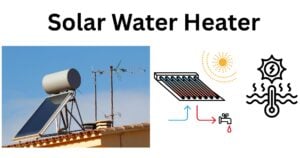
  • Solar Water Heater: Principles, Types, Components, Mechanisms, Applications, Advantages and Limitations Explained
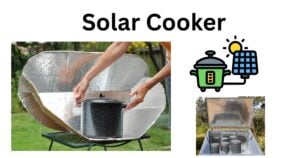
  • Solar Cooker: Principles, Types, Mechanisms, Advantages, Applications, and Limitations Explained
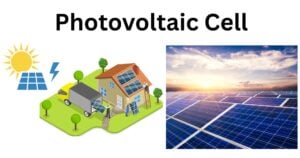
  • Photovoltaic Cells: Definition, Principle, Mechanism, Types, Advantages, Applications, Limitations, and Future Prospects Explained
  • Solar Energy Harvesting: Mechanisms, Principles, Processes, Applications, Advantages, Limitations, and Future Prospects Explained
  • About
  • Our Team
  • Contact Us
  • Editorial Policy
  • Privacy Policy
  • Cookie Policy
  • Disclaimer (Terms and Conditions)
© 2026 Science Info. Made with ♡ by Sagar Aryal.