
Introduction and Definition of Non-Renewable Energy Sources
Non-renewable energy sources have been recognized since ancient times. They are also found in nature, but sadly, their availability is limited. Non-renewable energy sources undergo geological processes that require a very long time, i.e., billions of years. They are formed from dead and decayed plants and animals, deep inside the earth. Hence, once used, they are very difficult to obtain.
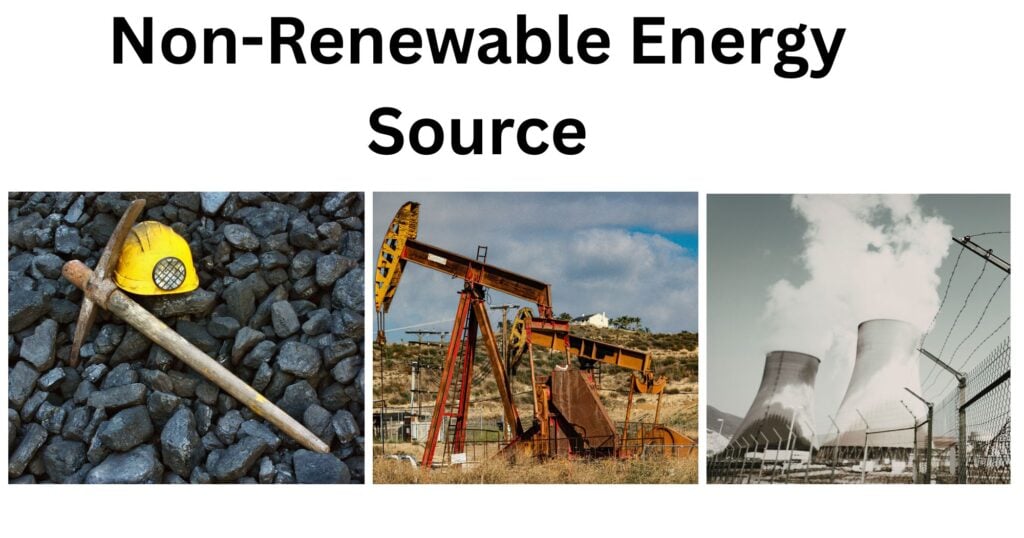
Some examples of non-renewable energy sources are fossil fuels like coal, natural gas, petroleum, etc. Radioactive elements like uranium, thorium, barium, etc., are also the source of non-renewable energy. In today’s situation, a huge amount of the world’s needs is fulfilled by these sources.
Although being reliable and a choice for a huge mass, their use is considered very harmful to nature. Several impacts, like pollution, global warming, greenhouse effects, etc. brought out by them. Hence, understanding all the advantages and limitations is very important. The world population is growing and also meeting the energy challenges. Therefore, a wise use of energy is the need of the contemporary world.
Characteristics and Key Features of Non-Renewable Energy
Non-renewable energy sources possess several important characteristics that distinguish them from renewable sources such as solar and wind energy.
Limited Availability
The most important feature of non-renewable energy is that the resources are limited. Once they are exhausted, they cannot be made available quickly.
Formed Over Millions of Years
These resources go through geological processes that take millions of years. Fossil fuels are formed from the remains of ancient plants and animals buried deep underground.
High Energy Output
Non-renewable energy sources are capable of providing a large amount of energy from a small quantity of the source.
Easy Storage and Transportation
Sources like coal, oil, and natural gas can be stored easily and transported on demand. They are transported through the pipelines and roadways like trucks.
Reliable Energy Supply
Since they are independent of weather conditions, they can generate energy continuously.
Causes Pollution
Most non-renewable energy sources release harmful gases and pollutants during use. Carbon dioxide, sulfur dioxide, and nitrogen oxides contribute to environmental pollution and climate change.
Supports Industrial Development
Modern industries depend heavily on fossil fuels for manufacturing, transportation, and electricity generation. They also support the industrial and economic development of a country.
Types of Non-Renewable Energy Sources (Fossil Fuels and Nuclear Energy)
Fossil Fuels
Fossil fuels are energy resources formed from the remains of dead plants and animals buried underground for millions of years.
Coal
Coal is a black or brown combustible rock mainly composed of carbon. It is one of the oldest and most widely used fossil fuels.
Coal is commonly used in:
- Thermal power plants
- Steel industries
- Cement factories
- Heating systems
Petroleum (Oil)
Petroleum is a liquid fossil fuel found deep underground. It is refined into useful products such as:
- Petrol
- Diesel
- Kerosene
- Lubricants
- Plastic materials
Petroleum is mainly used in transportation and industries.
Natural Gas
Natural gas is a gaseous fossil fuel made of methane. It burns more cleanly than coal and oil.
It is used for:
- Cooking
- Electricity generation
- Industrial heating
- Fertilizer production
Nuclear Energy
Nuclear energy is produced through nuclear reactions. The main elements taking part in these reactions are: uranium, plutonium, thorium, etc.
In nuclear power plants, a nuclear fission reaction occurs. This releases a tremendous amount of heat energy, which is used to generate electricity.
However, nuclear energy has a high risk of radioactive waste that must be carefully managed.
Formation and Origin of Non-Renewable Energy Sources
Formation of Coal
Coal was formed from the remains of ancient plants that lived in swampy forests millions of years ago. When these plants died, they became buried under layers of mud and sediments.
Over time:
- Heat and pressure increased
- Water and gases were removed
- Carbon concentration increased
This process transformed plant material into coal.
Formation of Petroleum and Natural Gas
Petroleum and natural gas are formed from tiny marine organisms such as plankton and algae that died and settled at the bottom of the oceans.
As layers of sediments accumulated:
- Heat and pressure increased
- Organic matter slowly changed into hydrocarbons
- Oil and gas became trapped in underground rock formations
Formation of Nuclear Fuels
Uranium and other radioactive elements were formed naturally during the creation of the Earth. These minerals are mined from rocks and processed for use in nuclear reactors.
Examples of Non-Renewable Energy Sources (Coal, Oil, Natural Gas, Nuclear)
Several important examples of non-renewable energy sources are used around the world.
Coal
Coal remains one of the largest sources of electricity generation globally.
-Uses of Coal
- Producing electricity
- Manufacturing steel
- Running industrial boilers
- Cement production
-Advantages
- Abundant reserves
- High heat value
- Relatively inexpensive
-Problems
- Heavy air pollution
- Carbon dioxide emissions
- Mining hazards
Oil (Petroleum)
Oil is one of the most important energy resources for transportation.
-Uses of Oil
- Fuel for vehicles
- Aviation fuel
- Plastic production
- Chemical industries
-Advantages
- Easy transportation
- High energy density
- Versatile applications
-Problems
- Oil spills
- Air pollution
- Greenhouse gas emissions
Natural Gas
Natural gas is considered cleaner than coal and oil.
-Uses of Natural Gas
- Cooking fuel
- Electricity generation
- Industrial heating
- Domestic heating
-Advantages
- Cleaner combustion
- Efficient energy production
- Lower emissions
-Problems
- Methane leakage
- Explosion risks
- Limited reserves
Nuclear Energy
Nuclear energy provides enormous energy from small amounts of fuel.
-Uses of Nuclear Energy
- Electricity generation
- Medical applications
- Scientific research
- Naval propulsion
-Advantages
- Very high energy output
- Low greenhouse gas emissions during operation
- Reliable electricity production
-Problems
- Radioactive waste
- High installation cost
- Risk of nuclear accidents
How Non-Renewable Energy Is Produced and Used
The production and use of non-renewable energy involve several processes.
- Extraction
The first step is extracting energy resources from the Earth.
Methods:
-Coal mining
-Oil drilling
-Natural gas extraction
-Uranium mining
- Processing
After extraction, fuels are processed for practical use.
Examples:
-Crude oil is refined into petrol and diesel
-Natural gas is purified
-Uranium is enriched for nuclear reactors
- Energy Generation
Non-renewable fuels are mainly used to generate heat energy.
Thermal Power Plants
In coal, oil, or gas power plants:
-Fuel is burned
-Heat converts water into steam
-Steam rotates turbines
-Turbines generate electricity
Nuclear Power Plants
In nuclear plants:
-Uranium atoms split
-Heat is produced
-Steam is generated
-Turbines produce electricity
- Transportation and Industry
Petroleum fuels vehicles, airplanes, ships, and heavy machinery. Industries use fossil fuels for manufacturing, heating, and chemical production.
Applications of Non-Renewable Energy in Daily Life and Industry
- Household Uses
Examples:
-Cooking
-Heating
-Electricity
-Transportation
Natural gas is widely used in homes for cooking and heating purposes.
- Transportation
Most vehicles depend on petroleum products.
Examples:
-Cars use petrol
-Trucks use diesel
-Airplanes use aviation fuel
-Ships use heavy fuel oil
- Electricity Production
Coal, oil, gas, and nuclear power plants generate electricity for homes, schools, hospitals, and industries.
- Industrial Applications
Industries require large amounts of energy and depend on non-renewable sources. Some industries using them are: steel industries, cement manufacturers, chemical industries, textile industries, etc.
- Agricultural Uses
Agriculture also depends on fossil fuels.
Examples:
-Tractors and harvesters
-Irrigation pumps
-Fertilizer production
-Transportation of crops
- Medical and Scientific Applications
Nuclear energy and radioactive materials are used in:
-Cancer treatment
-Medical imaging
-Scientific research
-Sterilization of equipment
Advantages of Non-Renewable Energy Sources
Despite having major issues and concerns, they are still popular because of their advantageous side. Some advantages are given below:
High Energy Efficiency
Fossil fuels and nuclear fuels are important for producing tremendous energy even from small quantities.
Reliable Power Supply
We should not look for the weather conditions, and we can get an energy supply continuously.
Well-Developed Technology
The technologies based on non-renewable sources, like nuclear power plants, transportation, etc., have eventually become very advanced.
Supports Economic Development
As the industries and transportation systems become advanced, the economy of a nation also rises. There will also be the chance of employment for many youths.
Industrial Growth
The industrial growth to this extent is also possible due to the non-renewable sources like fossil fuels.
Limitations of Non-Renewable Energy Sources
The limitations of non-renewable energy sources are mentioned below:
Limited Stock
These resources are limited in nature. With the growing demand, they may eventually get depleted.
Environmental Pollution
They are regarded as very harmful to the environment. They bring pollution and unwanted changes to the environment.
Climate Change
They emit greenhouse gases that result in global warming, melting of ice, climate change, acid rains and other serious issues.
Mining Hazards
Mining of coal and oil drilling can cause serious accidents and environmental destruction.
High Nuclear Risks
Nuclear energy involves risks such as:
- Radiation leaks
- Nuclear accidents
- Radioactive waste disposal
Unequal Distribution
The availability of non-renewable sources is also not even in all countries. Some countries are rich in fossil fuel reserves, while others have to import them.
Costly
Since the non-renewable sources are unequal in distribution, the import cost is high. The extraction process is also very expensive.
Environmental Impact of Non-Renewable Energy
Air Pollution
Burning of fossil fuels releases harmful gases like Carbon dioxide, Sulfur dioxide, Nitrogen oxides, and smoke. This degrades the air and causes damage to health and the environment.
Global Warming
The released gases are also called greenhouse gases. They do not let the heat flow from the atmosphere. These are hazardous and cause a rise in temperature unexpectedly, melt glaciers, cause a rise in sea level, and other seasonal changes.
Acid Rain
Sulfur dioxide and nitrogen oxides react with rainwater to form acid rain.
Acid rain damages:
- Forests
- Lakes
- Buildings
- Crops
Water Pollution
The unmanaged oil and mining waste degrade water.
Land Degradation
Mining activities can destroy the land and forest. This can loosen the soil and also affect the biodiversity.
Radioactive Pollution
Unmanaged radioactive waste can cause nuclear accidents because their effect can remain long-term. For example, the Chornobyl disaster and the Fukushima nuclear disaster.
Importance and Future of Non-Renewable Energy Sources
Importance
Non-renewable energy sources have some major issues and limitations. However, they are still regarded as part of the energy source by a major portion of the world. This shows how important they are today. The infrastructure of a country heavily relies on them. Discarding them totally can also create huge losses in a country’s socio-economic development. Some importance of
- They are the backbone of modern civilization.
- They also help in the economic and infrastructural growth of a country.
- This energy supply is reliable and affordable. Thus, it builds a stable and developed nation.
- They are also the reason for modern technologies, innovations, and scientific development.
Future of Non-Renewable Energy
The future of non-renewable energy is a major concern today. Since the population is growing, the need for energy is also growing continuously. Furthermore, the technologies based on non-renewable energy sources are increasing rapidly. This creates a challenging situation for the future. The depletion of these energy sources can leave no energy sources for the successors.
Non-renewable energies are also the reason for growing environmental challenges. The world is already searching for its option. Renewable energy can replace them perfectly to save the environment. Technologies are also evolving to decrease emissions from the conventional sources. The future energy system will likely combine both renewable and non-renewable energy sources to meet future needs.
Conclusion
It cannot be denied that all the innovations from the past were possible due to non-renewable energy. The daily activities like transportation, communication, electricity, and other human activities are based on these energy sources. They are reliable, efficient, and also affordable for many developing and underdeveloped countries. They also help in the infrastructural and economic development of those regions.
Although they have a major role in shaping the modern world, they have created huge environmental impacts that are hard to bear. Moreover, they are also limited in stock. If their use grows continuously like this, future generations will have nothing but non-renewable energy. Thus, all these facts should be deeply concerned by every nation. Sustainable development, preserving nature, is impossible with them.
The cost of renewable energy is huge. However, some economically stable nations have already replaced the non-renewable energy sources. Other countries are also initiating it. With time and evolving technologies, the cost of their installation may also reduce. In the future, the need for energy may grow substantially. Hence, there must be a careful and balanced management of the non-renewable sources of energy. Additionally, it is essential to understand the benefits, scopes, and limitations of non-renewable energy to use them wisely.
References
- Güney, T. (2019). Renewable energy, non-renewable energy and sustainable development. International Journal of Sustainable Development & World Ecology, 26(5), 389-397.
- Analyzing Renewable and Nonrenewable Energy Sources for Environmental Quality: Dynamic Investigation in Developing Countries – Khan – 2021 – Mathematical Problems in Engineering – Wiley Online Library
- Freedman, B., Dorsey, W., Frazier, A., Kambhampati, M., Galiotos, J., & Mukherjee, S. (2024). ~ Renewable and Non-renewable Energy Sources. Environmental Science.
- Mohammadi, H., Saghaian, S., & Zandi Dareh Gharibi, B. (2023). Renewable and non-renewable energy consumption and its impact on economic growth. Sustainability, 15(4), 3822.
- https://en.wikipedia.org/wiki/Non-renewable_resource
- https://byjus.com/physics/non-renewable-energy/
