
Introduction and Definition of Solar Energy Harvesting
Solar energy harvesting is a modern renewable energy technique that collects the sunlight and converts the energy for other usable purposes. The maximum possible energy to the Earth comes from the Sun. Therefore, this process is a very important technology to get a continuous energy supply. Sunlight is abundant in most regions of the Earth and is also a sustainable, clean energy source. Hence, it is the most demanded energy in today’s context.
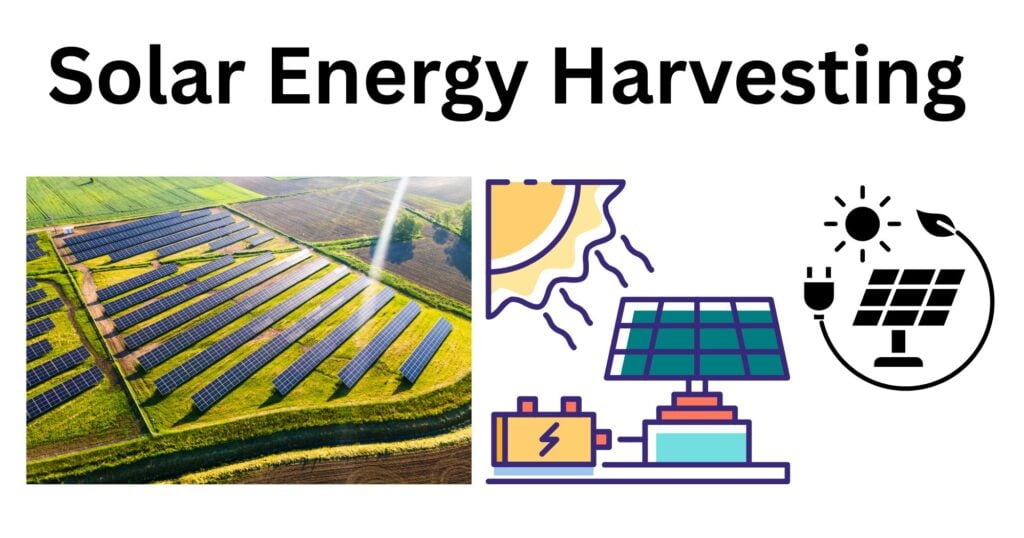
The Sun continuously undergoes nuclear fusion reactions and hence releases tremendous energy. Thus, the produced energy is in the form of heat and light and is beyond our imagination. The energy is never exhausted. That small portion of energy from the sun reaches the Earth, and it is also sufficient for our survival. Solar energy harvesting is a technology that utilizes this energy in an efficient manner.
We are dependent on sunlight for all of our activities. Household purposes like heating, drying clothes or crops, lighting the houses, etc., are all done with the sunlight. The same activities are made easier and more efficient by developing harvesting technologies. Technologies like photovoltaic cells, solar thermal collectors, solar power systems, etc, are popular today. They are also the best replacement for the use of non-renewable sources of energy.
Today, solar energy is used in homes, industries, transportation systems, agriculture, and communication networks. The advancements in solar technologies have improved the environmental conditions and are also affordable. This makes solar energy most reliable.
Principle of Solar Energy Harvesting
Einstein’s Photoelectric Effect lies behind the solar energy harvesting concept. As we know, light has a dual nature; the sunlight has tiny packets of light called photons. When the radiation hits a metal surface, they emit electrons. Thus, a charge can be made to flow. This can produce electricity and also thermal energy.
There are two major approaches in this technique:
- Photovoltaic conversion: Sunlight is directly converted into electricity.
- Thermal conversion: Sunlight is converted into heat energy.
In photovoltaic systems, semiconductor materials are used. They absorb photons from sunlight. These photons, upon falling on the semiconductor material, release electrons from the material. These electrons are further capable of generating electricity.
In thermal systems, the sunlight is absorbed by collectors. The absorbed radiation is converted into heat. The heat can be used for several processes, such as water heating, space heating, industrial processes, etc.
Solar energy harvesting depends upon the weather conditions and also the ability of the materials to absorb the sunlight. Other factors, like the designation of the system and other external losses, can also risk the energy conversion processes.
Lastly, the principle of energy transformation solely depends upon converting solar radiation into practical forms of energy.
Mechanism of Solar Energy Conversion (Photovoltaic Effect and Thermal Systems)
The solar energy conversion process also goes through certain mechanisms.
Photovoltaic Effect
The photovoltaic effect is the process of converting sunlight into electricity.
The photovoltaic cells mostly use silicon-based semiconductors. So, when the sunlight hits the cell, photons give all their energy to the electrons in that semiconductor. These electrons are free and can move through the semiconductor. Thus, an electric field is created in the cell. This electric field makes the electrons move in a particular direction and hence can generate current.
The direct current (DC) is produced by this process. Later, it is converted into alternating current (AC) for household and industrial use. Today, photovoltaic cells are famous worldwide for generating electricity.
Thermal Energy Conversion
Solar thermal systems collect the sunlight and convert it into heat.
Special collectors absorb solar radiation and transfer the heat to a working fluid such as water, oil, or air. The heated fluid can then be used for various purposes.
Common applications include:
- Water heating
- Space heating
- Industrial heating
- Electricity generation through solar thermal power plants
There are also advanced systems like solar thermal power plants. They use mirrors to concentrate light on the receiver. The concentrated heat produces steam, which drives turbines connected to generators.
Types of Solar Energy Harvesting Technologies
Several technologies have been developed to harvest solar energy effectively.
Photovoltaic (PV) Technology
Photovoltaic technology is a system that converts sunlight into electricity with the help of solar cells.
PV systems are the most common solar energy harvesting technology. They are widely used in houses, for business purposes, and in industrial applications.
Types of photovoltaic cells include:
- Monocrystalline silicon cells
- Polycrystalline silicon cells
- Thin-film solar cells
- Perovskite solar cells
Photovoltaic systems are popular because they are relatively simple, scalable, and require minimal maintenance.
Solar Thermal Technology
Solar thermal technology converts solar radiation into heat energy.
These systems use solar collectors to absorb sunlight and transfer heat to a fluid.
Examples include:
- Solar water heaters
- Solar air heaters
- Solar cooking systems
- Industrial heating systems
Solar thermal technology is particularly effective in applications requiring direct heating.
Concentrated Solar Power (CSP)
Concentrated Solar Power uses mirrors or lenses to focus sunlight onto a small area.
The concentrated sunlight generates extremely high temperatures that produce steam for electricity generation.
Common CSP technologies include:
- Parabolic trough systems
- Solar power towers
- Linear Fresnel systems
- Dish-Stirling systems
CSP plants are usually built in regions with strong and consistent sunlight, such as deserts.
These technologies allow solar energy to be harvested on both small and large scales, supporting diverse energy needs.
Components of a Solar Energy Harvesting System (Panels, Inverters, Storage)
The different components of a solar energy harvesting system are as follows:
Solar Panels
Solar panels are the main devices for capturing sunlight. They are built by using several photovoltaic cells. These cells are able to convert the light into electricity.
Solar panels must be placed in such a way that they are incident on maximum radiation. Generally, they are placed on the rooftops.
Inverters
The electricity obtained from solar panels is primarily DC. Therefore, to convert into an AC, an inverter is used. As most of the household and industrial appliances use AC, generally, an AC output is desired.
Battery Storage Systems
Battery systems store excess electricity produced during sunny periods.
Stored energy can be used during:
- Nighttime
- Cloudy weather
- Power outages
Modern battery technologies include:
- Lithium-ion batteries
- Lead-acid batteries
- Flow batteries
Energy storage improves reliability and energy independence.
Charge Controllers
Charge controllers regulate the flow of electricity between solar panels and batteries.
They prevent overcharging and excessive battery discharge, extending battery life.
Mounting Structures
Mounting structures support solar panels and position them at optimal angles to receive sunlight.
These structures must withstand wind, rain, and other environmental conditions.
Monitoring Systems
Monitoring devices track energy production, consumption, and system performance.
They help users identify faults and optimize system operation.
Together, these components create a complete solar energy harvesting system capable of generating and managing renewable energy efficiently.
How Solar Panels Work to Generate Electricity
Solar panels undergo various physical processes sequentially to generate
Electricity.
- First, the radiation from the sun is made incident on the solar panel.
- The photovoltaic cells made from semiconductor materials can capture the light.
- When photons from sunlight hit the semiconductor material, they transfer energy to electrons.
- This energy releases electrons from their atoms..
- The electric field is developed in the photovoltaic cell having two layers of semiconductor.
- The electric field directs the flow of those free electrons towards the metallic cell surface. This behaves as an electrical circuit.
- Now, these electrons flowing on the surface produce an electric current.
- The produced current is now connected to the inverter to convert it into AC.
- This current is able to power electrical devices.
If the energy is required to be stored for later, batteries are installed in the system.
The process operates continuously and efficiently if the intensity of radiation is very high and the panel can collect ot enough for the process.
Factors Affecting Solar Energy Harvesting Efficiency
The efficiency of solar energy harvesting depends on the following factors:
Sunlight Intensity
Sunlight intensity affects the technique very much. High intensity of light is capable of producing high energy. Therefore, a place facing intense sunshine can produce greater energy than a cold region.
Panel Orientation and Tilt
Solar panels must be positioned in such angles that the radiation falls at a maximum. Incorrect orientation can significantly reduce energy generation.
Temperature
Of course, high intensity is required, but high temperature reduces the efficiency of the device.
Most photovoltaic cells work efficiently under moderate temperatures.
Dust and Dirt Accumulation
The accumulation of dust, dirt, bird droppings, and debris can disturb the light hitting on the surface. Hence, the incident surface must be kept neat to get good results.
Shading
Any kind of shade and shadows on solar panels can reduce the electricity generation. Hence, they should face the light properly with no obstacles.
Quality of Solar Cells
Different solar cell technologies have different efficiency levels.
High-quality cells convert a greater percentage of sunlight into electricity.
Natural Conditions
Natural conditions like clouds, fog, rain, etc., can affect solar radiation reaching the panels.
Age of the System
Solar panels gradually lose efficiency over time.
However, most modern panels maintain high performance for 25 years or more.
All these factors must be focused on and studied clearly before installing the solar energy harvesting techniques.
Applications of Solar Energy Harvesting in Daily Life and Industry
There are wide applications of solar energy harvesting. Some of the applications are:
Residential Applications
Homes use solar energy for:
- Electricity generation
- Water heating
- Space heating
- Outdoor lighting
- Battery charging
The bills from these systems are comparatively very low and hence is dependable.
Commercial Buildings
Businesses use solar systems to lower operating costs and reduce environmental impact.
Industrial Applications
Industries use solar energy for:
- Process heating
- Manufacturing operations
- Cooling systems
- Electricity generation
Large industrial facilities often install extensive solar power systems to meet energy demands.
Agriculture
Solar energy supports agriculture through:
- Water pumping
- Irrigation systems
- Greenhouse heating
- Crop drying
- Livestock facilities
Solar-powered equipment is especially useful in remote rural areas.
Transportation
Solar technology is increasingly used in transportation.
Examples include:
- Solar-powered vehicles
- Charging stations for electric vehicles
- Solar traffic signals
- Railway systems
Telecommunications
Remote communication towers often rely on solar power because grid electricity may not be available.
Public Infrastructure
Governments use solar energy for:
- Street lighting
- Public buildings
- Water treatment systems
- Emergency power supplies
These applications demonstrate the versatility and importance of solar energy harvesting in modern society.
Advantages of Solar Energy Harvesting
Solar energy harvesting is highly advantageous. Some of the advantages are given below:
Renewable and Sustainable
The energy obtained from the sun is never exhausted and hence the most reliable source of energy.
Environmentally Friendly
The electricity produced from solar power is clean energy, and hence it has no negative impacts on the environment.
Reduced Energy Costs
After setting them, solar systems have no such high costs. The installation process is costly, but is offset by the post-installation costs.
Energy Independence
Solar systems allow homes, businesses, and communities to generate their own electricity.
Low Operating Costs
Solar systems require low maintenance and hence are reliable.
Wide Availability
Sunlight is accessible in almost all residential areas. Hence, energy production is possible in all places.
Job Creation
The solar industry creates employment opportunities in:
- Manufacturing
- Installation
- Maintenance
- Research and development
Scalability
Solar systems can be installed on small rooftops or expanded into large solar farms. Hence, they are flexible.
Limitations of Solar Energy Harvesting
The several challenges in this technology are given below:
Intermittent Energy Source
Solar energy production is a weather-dependent project. Hence, it would be difficult to generate electricity on gloomy days or at night.
High Initial Cost
The starting cost for a solar system is high and can be challenging for some users.
Energy Storage Requirements
Some harvesting systems require batteries to store the energy. This may be difficult and costly.
Land Requirements
The solar energy harvesting systems consume a large piece of land. Thus, it cannot be maintained in every place.
Efficiency Limitations
Current technologies are limited in type and cannot collect all the energy from the sun. This makes the energy production limited.
Manufacturing Challenges
Producing solar panels requires raw materials, energy, manufacturing facilities, and skilled manpower.
Environmental Impacts
Although lesser impacts than the non-renewable sources, they also produce some harmful impacts. Natural gases are emitted in the conversion processes, which can also degrade the environmental conditions.
End-of-Life Disposal
As solar installations increase worldwide, the proper recycling and disposal of aging panels becomes an important concern.
Future Trends and Innovations in Solar Energy Harvesting
The future of solar energy harvesting seems long-lasting and more efficient. Some of the future works may be:
High-Efficiency Solar Cells
Researchers are developing new materials that can convert more sunlight into electricity.
Perovskite solar cells and tandem solar cells are some examples being used to get more efficiency.
Advanced Energy Storage
Improved battery technologies are making solar energy more reliable.
Future storage systems may have greater capacities, be durable, and be affordable.
Smart Solar Systems
Artificial intelligence and smart monitoring systems can optimize solar energy production and consumption.
Building-Integrated Photovoltaics
Solar cells are also being incorporated into building materials such as:
- Windows
- Roof tiles
- Facades
Thus, it can support designing and construction works too.
Floating Solar Farms
Solar panels installed on lakes, reservoirs, and other water bodies are gaining popularity.
Floating systems serve natural cooling, save land, and can improve the panel performance.
Flexible and Lightweight Panels
Researchers are developing thin, flexible solar panels that can be integrated into clothing, vehicles, and portable devices.
Space-Based Solar Power
Future concepts involve collecting solar energy in space and transmitting it to Earth using wireless technologies.
This idea could provide eternal energy for the Earth.
Improved Recycling Technologies
New recycling methods are supposed to recover valuable materials from old solar panels. This supports sustainable resource management.
Conclusion
Solar energy harvesting is a growing technique in the field of science and technology. The demand of the new generation is for renewable energy, which can be fulfilled by the technique. It collects the sunlight and converts it into useful forms of energy like electricity, heat, light, etc. It can be made easily available in most of the regions and is hence easily available. Also, the sunlight is abundant in nature and hence requires less cost to develop technologies like photovoltaic cells, solar power plants, etc.
The principle of solar energy harvesting is based on transforming solar radiation into usable energy. This is done with some physical and technological processes. Solar panels, inverters, batteries, and monitoring systems are combined properly to build reliable solar energy systems. This is effective in most of the situations.
Although having countless advantages, weather conditions affect the technologies. A gloomy or rainy day is likely to produce less energy. Other challenges, like efficiency limitations and storage requirements, also stand in the way of energy production. Continuous technological improvements are being made to solve the problems.
Solar energy has significant advantages and applications. The superior advantage over other sources is sustainability and environmental protection. Furthermore, cost reduction keeps it in high demand. As innovations continue to grow, the role of solar energy harvesting technology will become even more significant. It is also expected to support the economic development of a region. Hence, it will go in the long run as a huge source of energy.
References
- Hao, D., Qi, L., Tairab, A. M., Ahmed, A., Azam, A., Luo, D., … & Yan, J. (2022). Solar energy harvesting technologies for PV self-powered applications: A comprehensive review. Renewable energy, 188, 678-697.
- Mohammadnia, A., Rezania, A., Ziapour, B. M., Sedaghati, F., & Rosendahl, L. (2020). Hybrid energy harvesting system to maximize power generation from solar energy. Energy conversion and management, 205, 112352.
- Vasiliev, M., Nur-E.-Alam, M., & Alameh, K. (2019). Recent developments in solar energy-harvesting technologies for building integration and distributed energy generation. Energies, 12(6), 1080.
- Guilar, N., Chen, A., Kleeburg, T., & Amirtharajah, R. (2006, October). Integrated solar energy harvesting and storage. In Proceedings of the 2006 international symposium on low power electronics and design (pp. 20-24).
- Páez-Montoro, A., García-Valderas, M., Olías-Ruíz, E., & López-Ongil, C. (2022). Solar energy harvesting to improve capabilities of wearable devices. Sensors, 22(10), 3950.
- Abdin, Z., Alim, M. A., Saidur, R., Islam, M. R., Rashmi, W., Mekhilef, S., & Wadi, A. (2013). Solar energy harvesting with the application of nanotechnology. Renewable and sustainable energy reviews, 26, 837-852.
- https://energytheory.com/5-methods-of-solar-energy-harvesting/
- https://link.springer.com/chapter/10.1007/978-981-96-4492-6_16
- https://scienceinsights.org/how-solar-energy-is-harvested-and-converted/
- https://www.researchgate.net/publication/358714332_Solar_energy_harvesting_technologies_for_PV_self-powered_applications_A_comprehensive_review
