Formal Charge Calculation

Formal Charge Calculation
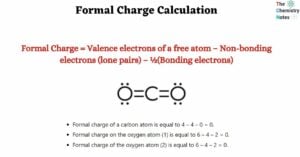
Formal charge calculation is significant since it is used to determine the lowest energy configuration among the different potential Lewis structures of a molecule. An atom in a molecule is given a formal charge if all of the electrons in the … Read more
General Organic Chemistry: Terms, Important Topics

General Organic Chemistry

General Organic Chemistry (GOC) introduces students to the fundamental ideas of organic chemistry. A solid comprehension of the principles covered by General Organic Chemistry is essential for studying more advanced topics (such as the mechanisms of named reactions). Berzelius (1808) … Read more

Resonance Structures: Significance, Example, Rules

Resonance Structures Significance, Example, Rules

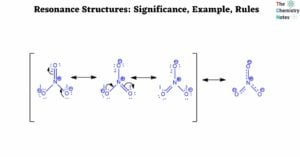
A polyatomic ion’s or molecule’s electron delocalization is described by resonance structures. Due to the presence of partial charges and fractional bonds in a molecule/polyatomic ion, a single Lewis structure fails to describe the bonding in many circumstances. Resonance structures are … Read more

mCPBA: Preparation, Properties, Reactions

mCPBA

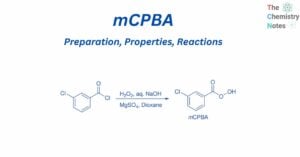
mCPBA (Meta-chloroperoxybenzoic acid ) is a peroxycarboxylic acid with the chemical formula C7O3H5Cl. It is a white crystalline powder with a melting point of 90 degrees Celsius. mCPBA is a powerful oxidising agent that is commonly employed as an oxidant … Read more

PCC: Preparation, Properties, Reactions

PCC

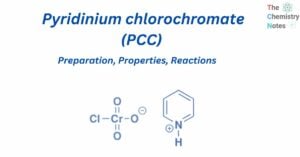
PCC (Pyridinium chlorochromate) is an oxidizing agent with the formula [C5H5NH]+[CrO3Cl]. It is a reagent in chemical synthesis that is mostly used to oxidize alcohols to generate carbonyls. Corey and associates first developed pyridinium chlorochromate, which is a stable orange solid … Read more

Meta Directors: Definition, Reactivity, Orientation

Meta directors

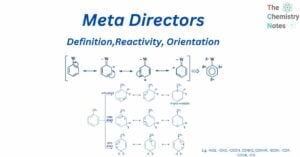
Meta directors are deactivating groups on benzene that direct the electrophile E to the meta position. In comparison to hydrogen, deactivating groups slow down the rate of electrophilic aromatic substitution. Substituents that pull electron density away from nearby carbocations (e.g., CF3, … Read more

Imine: Preparation, Properties, Reactions

Imine

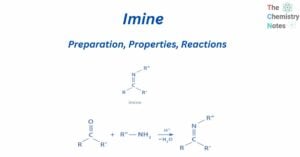
Imine is a chemical molecule with a carbon-nitrogen double bond (C=N). They have a C=N link rather than a C=O bond, and are the nitrogen analogs of aldehydes and ketones. So they are compounds with a carbon-nitrogen double bond – … Read more