Stoichiometry and Laws of Stoichiometry

Stoichiometry and Laws of Stoichiometry
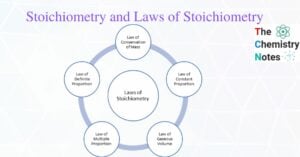
One of the most important topics in general chemistry is stoichiometry. Stoichiometry is a fundamental concept in chemistry that allows us to calculate the amounts of reactants and products using balanced chemical equations.  In general, all reactions are determined by … Read more
Crystals Defects- Causes, Types, Factors, Importance

Crystals Defects- Causes, Types, Factors, Importance

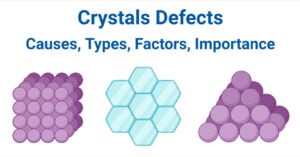
Defects in the crystal structure are imperfections in the crystalline solids’ regular geometrical arrangement of atoms. Temperature, pressure, impurities, and crystal formation conditions influence the size of the crystal and its perfection. As a crystal grows, various defects may appear. … Read more

Third Law of Thermodynamics

Third Law of Thermodynamics

The third law of thermodynamics is concerned with how systems behave as they approach absolute zero. It describes the relationship between heat and entropy at the absolute lowest temperature for crystals, which are defined as any solid material composed of … Read more

Second Law of Thermodynamics

Second Law of Thermodynamics

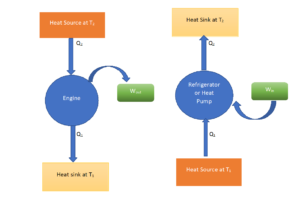
According to the second law of thermodynamics, the entropy of an isolated system or any cyclic process never decreases; it either increases or remains constant. As a result, the second law establishes a definite direction in which time must progress … Read more

First Law of Thermodynamics

First Law of Thermodynamics

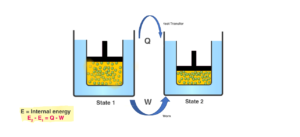
The first law of thermodynamics is one of the three fundamental laws of thermodynamics. It is derived from energy conservation but stated in a different and more useful manner for thermodynamics to include systems where heat transfer and work are … Read more

Atoms and Atomic Structure- Multiple Choice Questions (MCQ)

Atoms and Atomic Structure- Multiple Choice Questions (MCQ)

a) Which of the following models does not correspond to the Thomson Model of Atom? plum pudding model   watermelon model raisin pudding model nuclear model                                             b) Rutherford in his atomic model could not explain which of the following behaviour? Electrons … Read more

Corrosion- Definition, Causes, and Types

Corrosion

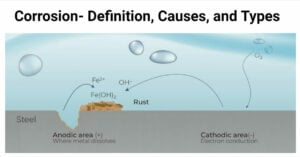
Corrosion is an undesirable phenomenon that destroys the luster and beauty of objects and shortens the life of materials. Thus, corrosion is defined as the destructive attack on the surface of metallic materials by chemical or electrochemical reactions with the … Read more