Combined Gas Law: Formula, Derivation, Examples

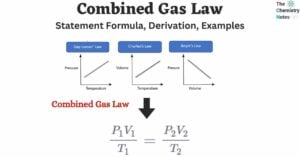
Combined Gas Law

The combined gas law is a combination of three gas laws: Boyle’s Law, Charles’ Law, and Gay-Lussac’s Law. It states that the ratio between the product of a gas’s pressure and volume and its absolute temperature is constant. The ideal … Read more

Changing States of Matter

Changing States of Matter

Changing states of matter is the process of turning solid into gas or liquid, and vice versa. Whenever a substance undergoes energy absorption or dissipation, it transitions into its physical state. The underlying cause of this transformation can be attributed to … Read more

Principle of Quantitative and Qualitative Analysis

Principle of Quantitative and Qualitative Analysis

Quantitative and qualitative analysis are the two main types of methods used in chemistry to determine the chemical makeup of a material. When comparing qualitative and quantitative research, the main distinction in chemistry is that while the former determines the … Read more

Vapor Pressure of Liquid-Liquid Solution

Vapor Pressure of Liquid-Liquid Solution

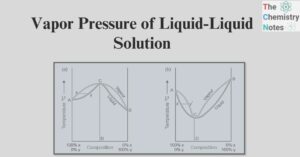
The study into the vapor pressures of mixtures comprising fully miscible liquids has proven to be highly beneficial in facilitating the separation of these liquids through the process of fractional distillation. The vapor pressures of two liquids were measured at … Read more

Effect of Temperature on Rate of Reaction

Effect of Temperature on Rate of Reaction

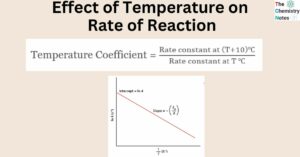
The rate of most of the chemical reactions increases with an increase in temperature. The rate constant of a chemical process doubles for every 10 degrees Celsius rise in temperature. Until 1889, there was no precise way to physically determine … Read more