Dehydration Synthesis: Types, Examples, Importance
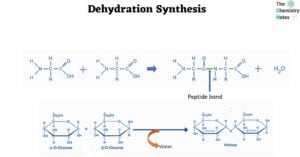
Dehydration Synthesis

Dehydration synthesis, also known as a dehydration reaction, is a chemical process in which a new molecule is formed while water is removed from the result. Concentrated phosphoric acid, concentrated sulfuric acid, and alumina are some popular dehydration agents. What … Read more

Acid Catalyzed Hydration

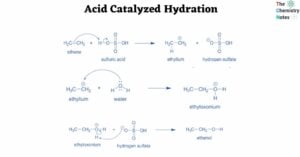
Acid Catalyzed Hydration

Acid catalyzed hydration is a chemical process that happens when an acidic catalyst causes the addition of water to an unsaturated substrate. In an acidic media, for example, an ethene solution can undergo hydration to create alcohol. Sulfuric acid and … Read more

Amino Functional Group

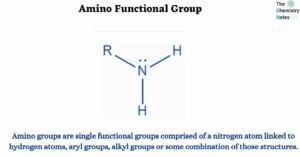
Amino Functional Group

A functional group is a specific group of atoms within a molecule that is responsible for a molecule’s characteristic. One or more functional groups are found in many biologically active compounds. The various functional groups are  hydroxyl, methyl, carboxyl, carbonyl, … Read more

Constitutional Isomers: 5 Important Types and Examples

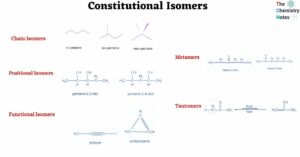
Constitutional Isomers

Isomers are molecules having the same chemical formula but distinct structural configurations. Constitutional isomers and stereoisomers are two types of isomers. The structural isomers or constitutional isomers differ in the way their atoms are connected, and this phenomenon is known … Read more

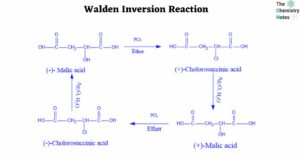
Walden Inversion Reaction: Mechanism, Example

Walden Inversion Reaction

A bimolecular nucleophilic substitution (SN2) reaction results in a change in the configuration of a chiral center known as a “Walden inversion reaction.” This inversion, also known as optical inversion, may or may not result in a change in the … Read more