Heat Capacity and Specific Heat

Heat Capacity and Specific Heat Capacity
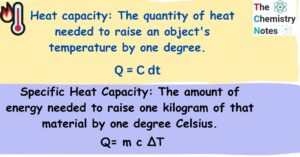
Heat has varying effects on various compounds. On a hot day, a metal chair placed in direct sunlight may get very warm to the touch. In the same sun, a same body of water won’t get nearly as warm. To … Read more

Collision Theory of Chemical Kinetics

Collision Theory of chemical kinetics

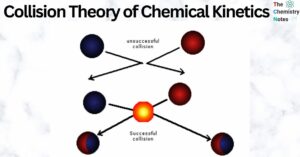
Studies of the kinetics of a chemical system, like the effect of changes in reactant concentrations, can be used to figure out things that happen on a microscopic scale. These kinds of studies led to the collision model of chemical … Read more

Thermodynamic Terms and Basic Concept

Basic Concept of Thermodynamics

The study of the flow of heat or any other form of energy into or out of a system as it undergoes a physical or chemical transformation is called Thermodynamics. Simply, it is the study of the relationship between heat, … Read more

Radiation and Radioactivity: Alpha, Beta, and Gamma

Radiation and Radioactivity Alpha, Beta, and Gamma

Several substances, including uranium and radium, are unstable. Their atomic nucleus spontaneously disintegrates into a smaller atomic nucleus of a different element. To create the new nucleus, the protons, and neutrons in the unstable nucleus recombine. Radiation, which we refer … Read more

Intermolecular Forces in Liquid: 3 Important Types

Intermolecular Forces in Liquid

Forces of attraction and repulsion between molecules are known as intermolecular forces. The interactions between molecules of a substance are mediated by these forces. Intermolecular forces are responsible for most of the physical and chemical properties of matter. In general … Read more