Test Tubes: Types, Use, Disadvantages

Test Tubes Types, Use, Disadvantages

Chemists frequently utilize test tubes to hold, combine, or heat small amounts of solid or liquid compounds, particularly in qualitative studies and assays. They are easier to clean, have a round bottom and straight sides that reduce mass loss when … Read more
Bleaching Agents: Types, Mechanism, Application

Bleaching Agents

Bleaching agents are the chemicals that lighten or whiten substances by dissolving colored substances or by changing its light-absorbing properties. Bleaching agents are commonly used in the paper and pulp industry, the textile industry, and the commercial and household laundering. … Read more

How to Prepare 1N NaOH Solution

How to Prepare 1N NaOH Solution

Sodium hydroxide, often known as lye and caustic soda, is an inorganic substance with the chemical formula NaOH. The substance in question is a white-colored solid ionic compound. It comprises sodium cations (Na+) as well as hydroxide anions (OH–). Sodium … Read more

Chromophores, Auxochromes, Absorption and Intensity shift

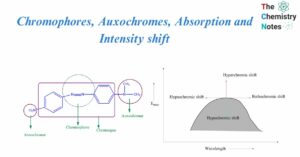
Chromophores

Chromophores It’s a Greek term i.e., Chroma “colour” and phoros “bearer”. It is defined as any isolated covalently bound group that exhibits distinctive electromagnetic radiation absorption in the UV or visible area. The chromophore-containing compound is chromagen. The electron is loosely … Read more

How to Prepare 0.1 N Oxalic Acid?

How to Prepare 0.1 N Oxalic Acid?

Oxalic acid is a reducing agent, and its conjugate base is oxalate. (C2O4)2- Oxalate acts as a chelating agent for metal cations. Oxalic acid is usually found as a dihydrate with the formula H2C2O4.2H2O. Equivalent Weight of Oxalic Acid Hydrated … Read more