Carbocation Stability: Definition, Factors, Order

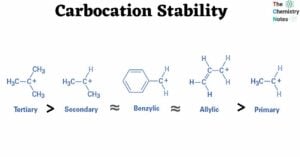
Carbocation Stability

A carbocation is a positively charged carbon atom that is cation. Carbocations are intermediates in many organic processes. They are typically unstable and short-lived, but can be sustained by resonance or nearby functional groups that can contribute electron density. Continue … Read more

Enolates and Formation of Enolates

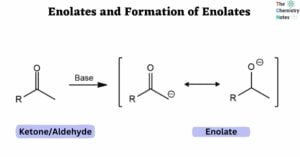
Enolates and Formation of Enolates

Enolates have an essential role as organic reactive intermediates. They have the properties of both alkoxide and carbanion. Enolates may be made from carbonyl compounds like aldehydes and ketones by protonating the oxygen atom and then deprotonating the alpha-carbon atom. … Read more

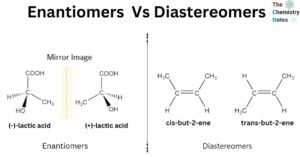
Enantiomers vs Diastereomers: Differences and Similarities

Enantiomers vs Diastereomers

The main difference between enantiomers vs diastereomers is that enantiomers are found as mirror images whereas diastereomers are not. Enantiomers and diastereomers are two different types of stereoisomers. Stereoisomers are groups of molecules with identical connectivity and chemical composition but differing spatial arrangements … Read more